


You're comparing electric rickshaw tuk specs, and the front suspension options are confusing. Choosing the wrong one means unhappy passengers, a jarring ride, and a vehicle that wears out prematurely.
For professional passenger transport, a swing arm front suspension is superior. It offers better comfort, durability, and safety under heavy, daily use, especially on imperfect roads. It's the smarter long-term investment for a commercial fleet.
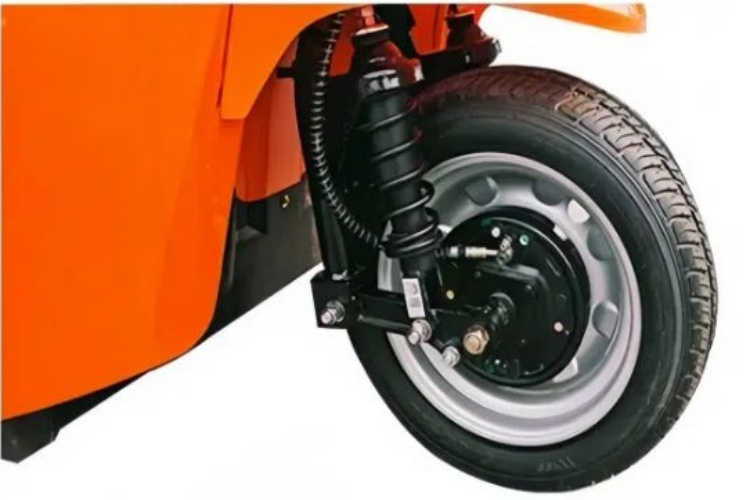
When clients visit my fabrika, we don't just look at motors and batteries. I always make them push down on the front end of our different models. You can feel the difference instantly. The front suspension is what separates a comfortable, professional vehicle from a cheap one that will rattle itself apart. Since passenger tuk-tuks often work long hours every day, getting this component right is crucial for your business's reputation and your bottom line. Let's break down the two main options.
What is the structural difference between a swing arm and a front fork suspension?
You see "swing arm" and "front fork" on a price list, but they just look like metal tubes. You risk choosing based on price without understanding the fundamental engineering differences.
A traditional front fork uses two sliding tubes, like a big bicycle fork. A swing arm suspension uses a pivoting arm to hold the wheel, with one or two separate shock absorbers connecting that arm to the vehicle's frame.
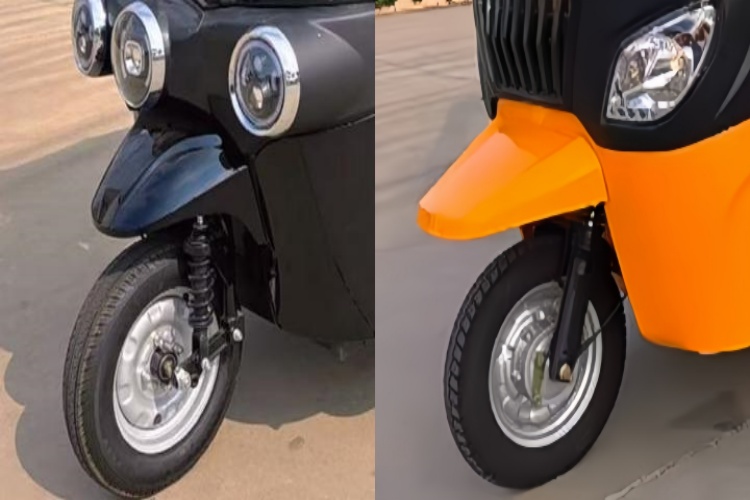
I like to explain it this way: the traditional front fork is a simple, direct design. The two shock-absorbing tubes are also the main structural component holding the wheel. It's a "telescopic" design where the tubes slide into each other to absorb bumps. It's simple, cheap to make, and steering feels very direct. This is an upgraded, heavy-duty version of what you see on electric scooters.
. swing arm, however, is a more advanced system, similar to what you might find on a car's suspension. The wheel is mounted on a sturdy "arm" that pivots. A separate shock absorber is then mounted between this arm and the main frame. This design separates the job of holding the wheel from the job of absorbing shocks. It allows for more creative engineering to improve stability and handle forces more effectively. The structure itself is inherently stronger and better at distributing impact forces throughout the vehicle's frame instead of just into two tubes.
| Özellik | Traditional Front Fork | Swing Arm Suspension |
|---|---|---|
| Yapı | Two sliding telescopic tubes | Pivoting arm with separate shocks |
| Force Handling | Stress is focused on the two tubes | Stress is distributed to the frame |
| Karmaşıklık | Simple, few parts | More complex, with pivots and links |
| Analogy | Heavy-duty bicycle fork | Simplified car suspension |
Which front suspension performs better on rough roads and under heavy loads?
Your rickshaws will operate on bumpy roads with multiple passengers all day. You need to know which suspension can handle this abuse without failing or making the ride unbearable.
The swing arm suspension performs significantly better. Its design provides more travel to absorb bumps, and its stronger structure resists the twisting and diving forces caused by heavy loads and hard braking, resulting in a safer, more stable ride.
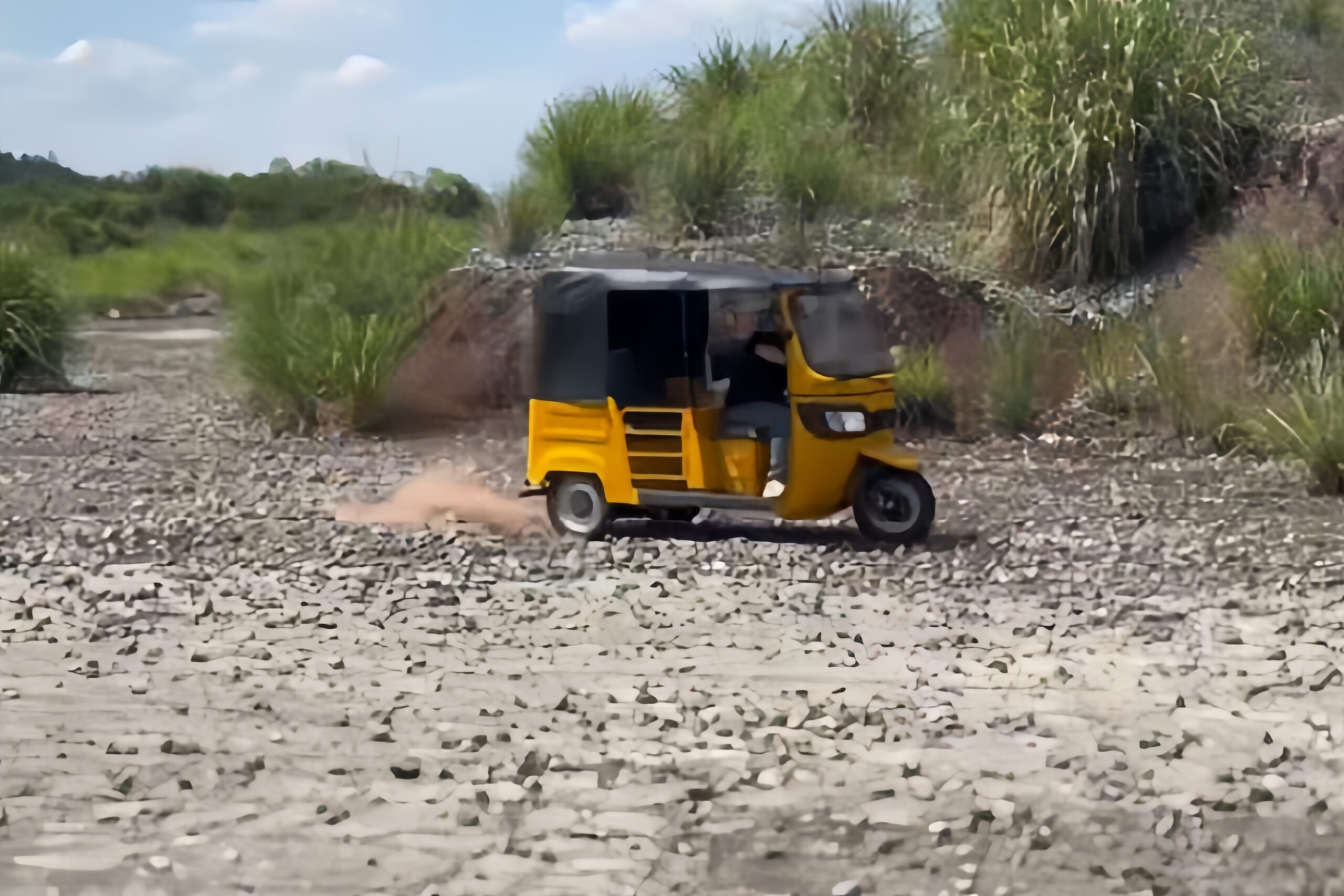
There is no contest here; for difficult conditions, the swing arm is king. I've seen videos from clients where a rickshaw with a basic fork suspension hits a pothole, and the whole front end "dives" and twists. This is because all the braking and impact forces go directly into those two tubes. Under a heavy load, this effect is much worse and feels very unsafe for the driver.
A swing arm's geometry is naturally better at resisting this "brake dive." When you hit the brakes hard, the forces are channeled through the arm and into the frame in a way that keeps the vehicle more level. Furthermore, the swing arm design allows for a longer suspension travel, meaning it can absorb bigger bumps without "bottoming out." The ride is noticeably softer and more controlled. For a passenger tuk-tuk business where comfort is part of the service, this makes a huge difference. If your routes include any kind of rough patches, steep hills, or frequent braking, the added stability and safety of a swing arm are not a luxury—they are a necessity. For the most demanding rural routes, it's the only option I recommend.
How do durability and maintenance costs compare in daily rickshaw operation?
You need a fleet that's reliable and cheap to run. Is it better to have a fork that's easy to replace or a swing arm that's built to last but might have complex parts?
A traditional fork is cheaper to replace but will wear out or fail much faster under heavy use. A well-built swing arm is far more durable, but requires periodic checks of its pivot points. For a commercial fleet, the swing arm's longer life provides a better ROI.
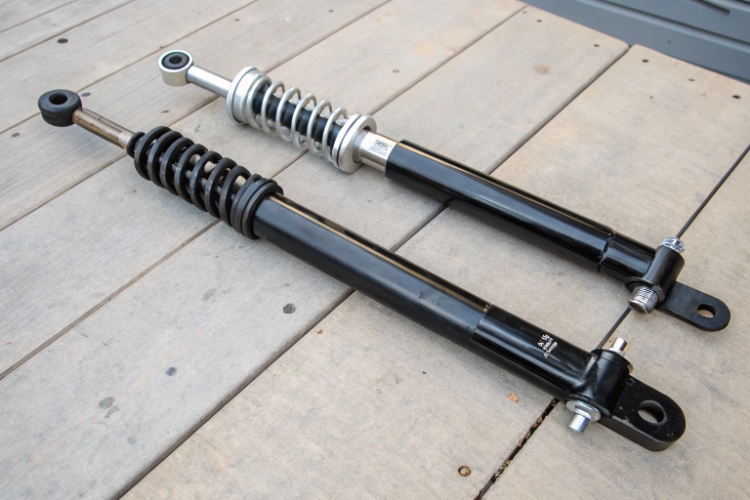
Let's talk about Toplam sahiplik maliyeti. The traditional fork is simple. If it breaks, it's relatively cheap to buy a whole new unit and bolt it on. Any local mechanic can do it. The problem is, under the constant stress of commercial use—heavy loads, bad roads, long hours—they fail often. The seals can leak, the tubes can bend, and the steering head bearings wear out quickly. You might be replacing them more often than you think.
A swing arm suspension has more parts: the arm itself, pivots, bushings, and the shock absorbers. A quality unit is built to be extremely tough. The main structure is very unlikely to bend or break. The maintenance items are the wear-and-tear parts, like the bushings in the pivot points. These need to be checked for looseness and lubricated periodically. While this might sound more complex, the reality for a fleet owner is that a few minutes of preventative maintenance on a swing arm is far better than having to deal with a catastrophic fork failure on a busy road. The swing arm is designed for a commercial lifespan, while the basic fork is often just a scaled-up consumer part.
Which suspension option is more suitable for different road conditions and usage intensity?
You don't want to overspend, but you also can't afford a vehicle that's not up to the job. How do you choose the right suspension for your specific business operation?
For light-duty use on smooth, paved city streets, a high-quality hydraulic fork can be adequate. For any serious taxi service, rural transport, or routes with hills and poor road quality, the swing arm is the only professional choice.
I help my clients make this choice every day by asking about their business. The answer is usually very clear once we lay out the operational reality. To make it simple, here is the decision guide I provide.
| Usage Scenario | Road Condition | Recommended Suspension | Why? |
|---|---|---|---|
| Hotel/Resort Shuttle | Smooth, private roads | High-Quality Hydraulic Fork | Speeds are low, loads are predictable, and road quality is good. Comfort is adequate and cost is lower. |
| Urban Last-Mile Delivery | Paved city streets | High-Quality Hydraulic Fork | Focus is on agility for short trips and lower initial cost. Heavy loads are less frequent than in passenger use. |
| Professional City Taxi | Mixed; Paved with potholes, speed bumps | Swing Arm | Long hours and constant use demand durability. Superior comfort is a key selling point for passengers. |
| Rural or Hilly Transport | Unpaved, rough, steep grades | Swing Arm | Safety and durability are paramount. The swing arm's strength and stability are non-negotiable in these conditions. |
My factory's position is firm: if passengers are your business and your vehicles run all day, you are a professional operator. You need professional equipment. The swing arm suspension is the professional choice. It demonstrates a commitment to safety, comfort, and long-term reliability that your customers will notice and your maintenance budget will appreciate.
Çözüm
For passenger electric rickshaws, the choice is clear. A swing arm suspension delivers the safety, comfort, and durability needed for professional use, making it the superior investment for your fleet.
