


Su ciudad invirtió en una nueva flota de triciclos sanitarios, pero ya están fallando. Los marcos se doblan, los volquetes se rompen y la recogida de residuos se retrasa.
Se centra en un chasis de acero reforzado con tratamiento antioxidante y un robusto mecanismo de descarga hidráulica. Estos dos componentes determinan la vida útil, la eficiencia y la seguridad del vehículo, lo que los convierte en los factores más críticos para cualquier proyecto de saneamiento municipal.

Cuando los encargados de adquisiciones para proyectos de limpieza urbana visitan nuestra fábrica, saben exactamente qué buscar. No se limitan a patear los neumáticos; se meten debajo del vehículo para inspeccionar las soldaduras de la viga principal y piden ver el sistema hidráulico en acción. Entienden que un triciclo sanitario No es un vehículo de carga estándar. Es una pieza de maquinaria pesada que tiene que soportar condiciones duras todos los días. Analicemos los componentes críticos que inspeccionan para que pueda elegir un vehículo que dure.
¿Cómo puedo evaluar la resistencia estructural y la capacidad de carga de un chasis de triciclo sanitario?
Ves un contenedor de basura grande en un triciclo, pero eso no significa que el marco pueda soportar el peso. Un chasis sobrecargado puede doblarse o incluso agrietarse, provocando fallas catastróficas y graves riesgos de seguridad.
Evalúe el chasis comprobando si tiene un marco de acero reforzado de alta resistencia con una viga principal soldada integrada. Confirme que la capacidad de carga oficial satisface sus necesidades e inspeccione la suspensión; busque horquillas delanteras de gran tamaño y un eje trasero diferencial diseñado para cargas pesadas.

The chassis is the backbone. Don't accept vague promises of "strong steel." Pregunte por detalles. Utilizamos acero de alta resistencia con una estructura de viga principal sólida e integrada porque distribuye uniformemente el peso de una carga completa de basura pesada y húmeda. Esto evita que el marco se tuerza en carreteras irregulares. Igual de importante es la suspensión que soporta la carga. La suspensión estándar de una motocicleta fallará rápidamente. Necesita horquillas delanteras de doble tubo de gran tamaño y un eje trasero de alta resistencia, a menudo un diferencial de tipo dividido, para brindar estabilidad y soporte. Por último, revisa los neumáticos. Los modelos resistentes como el 5.00-12 son esenciales para soportar el peso y resistir pinchazos.
| Característica del chasis | Diseño débil (fallará) | Diseño resistente (construido para durar) |
|---|---|---|
| Te principal | Canal en C de acero simple y atornillado | Viga principal sólida integrada y soldada |
| Suspensión | Muelles helicoidales estándar para motocicletas | Oversized dual-tube forks; heavy-duty rear leaf springs |
| Rear Axle | Lightweight, single-piece axle | Split-type differential rear axle for stability |
| Llantas | Standard, thin-walled tires | Heavy-duty, puncture-resistant 5.00-12 models |
What types of dump mechanisms offer the best efficiency and durability for municipal sanitation work?
Your workers are wasting time with slow, manual crank-dumpers, or the electric mechanism is weak and prone to burning out. Inefficient dumping slows down collection routes and increases labor costs.
A hydraulic dump mechanism is the most efficient and durable choice. It provides the power needed to lift heavy, compacted waste and offers fast, reliable cycle times (often under 20 seconds), making it ideal for the repetitive demands of municipal sanitation.
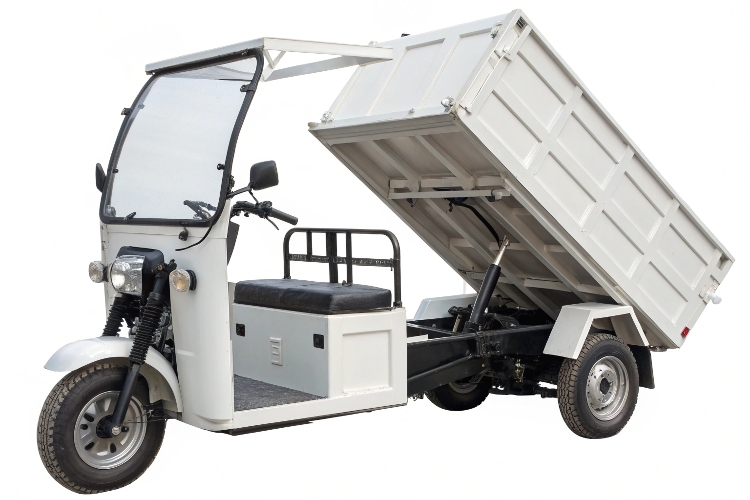
For serious municipal work, there is no substitute for hydraulics. Manual systems are too slow and cause worker fatigue. Electric systems are often underpowered for heavy waste and can fail in wet conditions. A well-designed hydraulic system, controlled by a multi-way valve, offers unbeatable performance. A key feature to look for is a "self-locking bin press" función que mantiene el contenedor seguro durante el transporte y el vuelco. El ángulo de inclinación también es fundamental; debe ser lo suficientemente empinado para garantizar que todo tipo de desechos, desde hojas secas hasta basura húmeda y pegajosa, puedan descargarse por completo sin que un trabajador tenga que limpiarlos manualmente.
| Tipo de volcado | Mejor para | Weakness |
|---|---|---|
| Manual (Crank/Lever) | Very light, infrequent use | Slow, physically demanding, inefficient for routes. |
| Electric (Winch/Actuator) | Medium-duty, dry waste | Can be slow, may lack power for heavy loads, risk of motor burnout. |
| Hydraulic (Pump/Cylinder) | Heavy-duty, frequent municipal use | Most efficient, powerful, and durable for all waste types. |
How do chassis material choices affect long-term maintenance and performance?
Your fleet looked great for the first year. Now, the frames are covered in rust, especially around the welds and under the dump body, requiring constant and costly maintenance to keep them safe.
A reinforced steel chassis treated with an advanced anti-rust process like electrophoretic coating or phosphating is vital. This treatment creates a durable barrier against corrosion from wet waste and harsh weather, drastically reducing long-term maintenance costs and extending the vehicle's life.
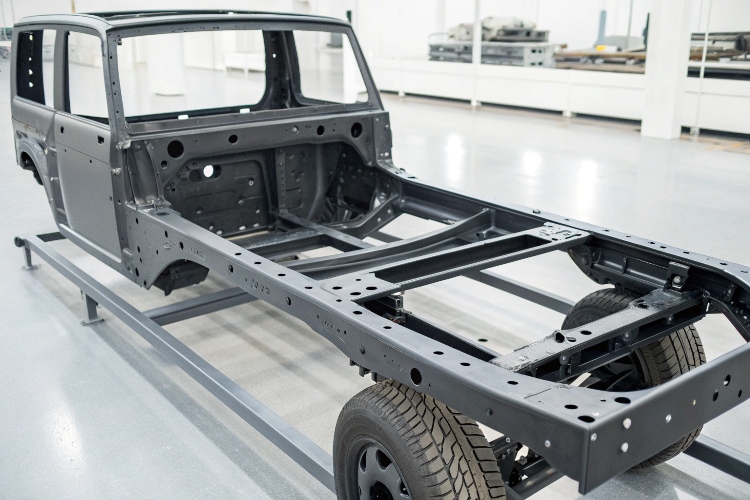
Sanitation environments are incredibly corrosive. The combination of moisture, organic acids from waste, and cleaning chemicals will destroy a poorly protected frame. A simple layer of spray paint is not enough. High-quality manufacturers use a multi-stage process. Electrophoretic coating, for example, uses an electrical charge to bond the protective layer to the steel, ensuring it covers every corner and crevice. This is the same technology used in the automotive industry. For the dump body itself, which is in direct contact with waste, a corrosion-resistant material like stainless steel or heavily treated steel is a must. This up-front investment in material protection pays for itself many times over by avoiding future rust repair and repainting.
What technical specifications should I prioritize when selecting a sanitation tricycle?
You have a technical data sheet with dozens of numbers. It's confusing to know which specifications actually impact daily operations, efficiency, and operator safety in your city's unique environment.
Prioritize maneuverability (a turning radius under 4 meters), usability (easy loading/unloading of bins), and comprehensive safety features. These practical specifications ensure the vehicle can work effectively and safely in the tight, busy streets where waste collection happens.
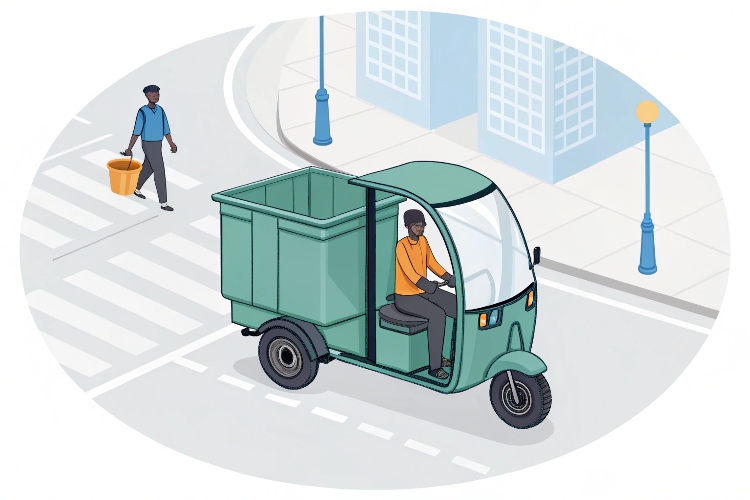
Beyond the core chassis and dumper, the small details make a big difference. Your tricycle must be able to navigate narrow alleys and make tight turns. A turning radius of 3-4 meters is excellent for this. One of the most overlooked features is how easily standard municipal trash bins can be loaded and unloaded. Look for a low lift height or a compatible hydraulic lifting mechanism. Operator safety and comfort are also key for a long work shift. A full set of LED lights (headlights, brake lights, turn signals), rearview mirrors, and an ergonomic operator cabin are not luxuries; they are necessities. Finally, check for easy maintenance access, like clearly marked grease points for the chassis and dump pivots.
Key Specification Checklist:
- Radio de giro: Under 4 meters for urban maneuverability.
- Bin Compatibility: Designed for easy loading/unloading of your city's standard waste bins.
- Safety Lighting: Full LED package (headlight, brake, turn signals).
- Operator Ergonomics: Comfortable seating and intuitive controls.
- Maintenance Access: Easily accessible grease points and hydraulic components.
- Garantía: Minimum 1-year warranty on the chassis and hydraulic system.
Conclusión
A reliable sanitation tricycle is a long-term investment in your city's public health. Prioritize a strong, anti-rust chassis and a powerful hydraulic dumper—these are the foundations of a durable fleet.
