


Your customers want a comfortable ride, but you need vehicles that don't break down. Choosing the wrong suspension system can lead to passenger complaints or expensive repair bills that eat your profits.
For electric tuk tuks, a Solid Rear Axle is the industry standard for durability and low cost, making it ideal for rough roads and heavy loads. Independent Rear Suspension (IRS) with CV axles offers superior passenger comfort and stability, perfect for premium taxi services, though at a higher price point.
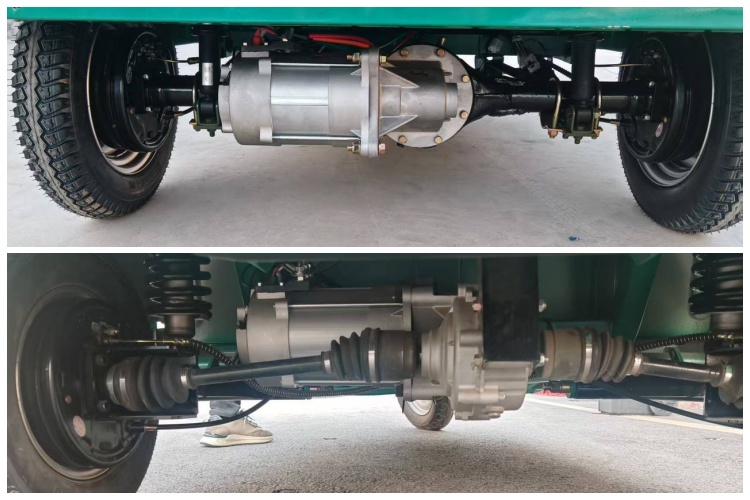
When you look at the spec sheet of an electric rickshaw, the rear axle configuration might look like a minor technical detail. It is not. This single component dictates how the vehicle handles corners, how much weight it can carry without snapping, and whether your passengers feel every single pothole on the road. As a factory owner, I see buyers make the mistake of ignoring this specification all the time. They either buy a suspension that is too expensive for their market's budget, or they buy a suspension that is too stiff and uncomfortable for premium passengers. Let's break down the two main choices—Solid Axle and Independent Suspension—so you can import the right machines for your market.
What Is a Solid Rear Axle and How Does It Work in Electric Tuk Tuks?
You see these on almost every cargo tricycle because they are built like tanks. But how do they actually function, and why do they dominate the affordable passenger taxi market?
A Solid Rear Axle connects both rear wheels with a single, rigid beam. Power flows from the motor to a central differential, which drives both wheels simultaneously. This design is simple, contains fewer moving parts, and is famous for being incredibly tough and easy to repair.
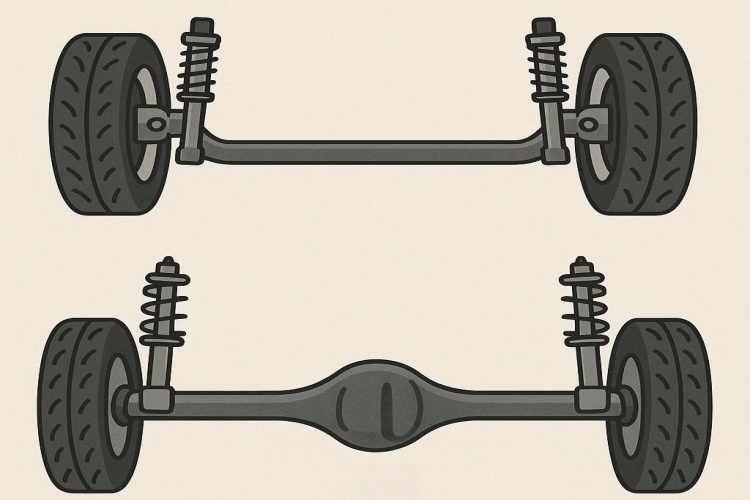
The Solid Rear Axle is the "workhorse" of the electric tricycle world. If you look under a heavy-duty cargo loader, this is what you will find. Because the technology is so mature and robust, we also use it on the majority of our standard passenger tuk tuks (like the 3+1 and 6+1 taxi models). Structurally, it is a rigid metal tube housing the axle shafts. When the vehicle goes over a bump, the entire rear assembly moves.
Why is this so common? First, Chidamlilik. There are no rubber boots to tear and fewer joints to wear out. In markets like Nigeria or rural India, where roads can be punishing, this simplicity is a huge advantage. It can take a beating. Second, Yuklash hajmi. This design was originally intended for hauling cement and bricks. When you put it on a passenger rickshaw, it is essentially "over-engineered" for the weight of 4 or 6 people. It will almost never bend under human weight. Finally, Narx. It is cheaper to manufacture, which allows you to sell the vehicle at a more competitive price to drivers who are sensitive to startup costs. It connects the motor directly to the differential in the center, distributing power reliably without complex linkages.
What Is Independent Rear Suspension and Why Is It Used in Electric Tuk Tuks?
If you want your tuk tuk to feel more like a car and less like a farm vehicle, you need this upgrade. But what makes the "CV axle" design so different?
Independent Rear Suspension (IRS) allows each rear wheel to move up and down separately without affecting the other. It uses Constant Velocity (CV) axles to transmit power at varying angles, significantly reducing body roll and keeping the cabin level on uneven ground.
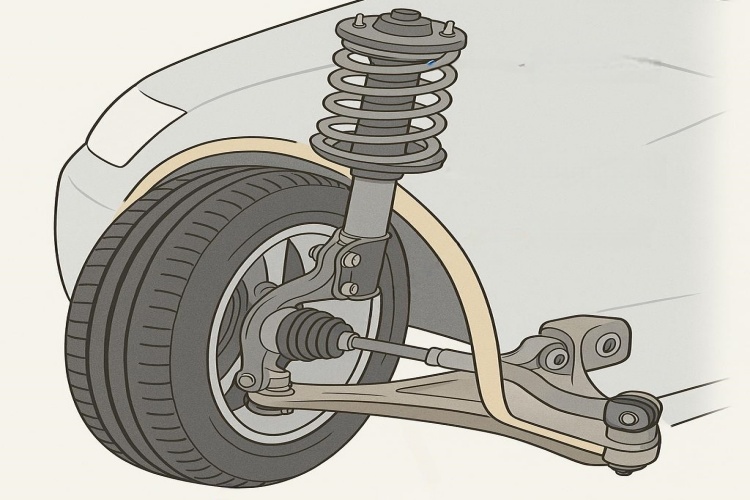
When we talk about Independent Rear Suspension in the context of electric tuk tuks, we are usually referring to a system that uses CV Axles (Constant Velocity joints), similar to what you see in a modern sedan. In a solid axle system, if the left wheel hits a large rock, the right wheel (and the whole cabin) tilts violently. With IRS, the left wheel pushes up to absorb the rock, but the right wheel stays flat on the ground.
For a passenger taxi, this offers two massive benefits. First is Comfort. The suspension soaks up vibrations and bumps much better, preventing that "bone-shaking" feeling on bad roads. Second is Barqarorlik. When a solid axle tuk tuk turns a corner fast, it can feel like it wants to tip over. An IRS system squats into the turn, keeping the tires planted and the passengers feeling safe. This uses a "Cage Ball" structure inside the CV joint to allow the driveshaft to spin smoothly even when the suspension is moving up and down. While it is strong enough for passengers, it is more complex than a solid axle. It has rubber boots that need to be checked, but for markets prioritizing ride quality, it is the superior technology.
How Do Solid Rear Axle and Independent Rear Suspension Compare in Load Capacity and Ride Comfort?
You are torn between toughness and smoothness. To make the right buying decision, you need to see exactly how these two systems stack up against each other in real-world metrics.
The Solid Axle wins on pure load-bearing strength and durability, making it the choice for heavy abuse. The Independent Suspension wins on ride comfort and handling, offering a premium feel but with slightly lower ultimate overload tolerance.
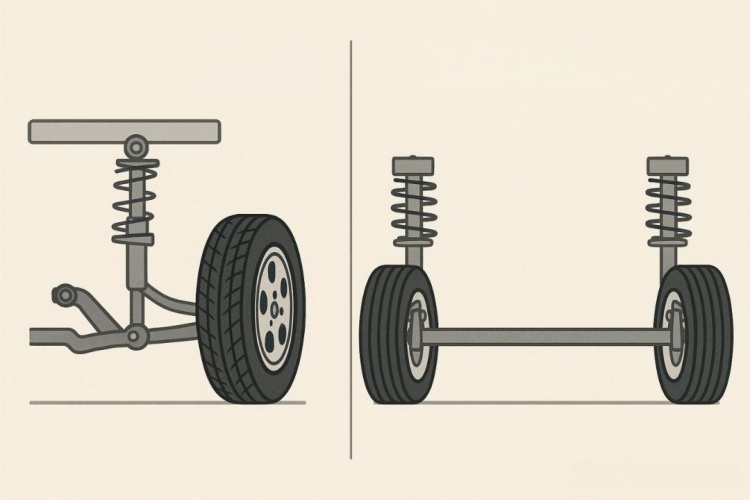
Let's look at the data directly. I often use a comparison table like the one below when explaining this to B2B distributors, because there is no "perfect" axle, only the "right" axle for your specific customers.
| O'ziga xos xususiyat | Independent Rear Suspension (IRS) | Solid Rear Axle |
|---|---|---|
| Structure | Independent Half-Shafts with CV Joints | Integrated Rigid Bridge |
| CV Joint Present? | ✅ Yes (Contains Cage Ball) | ❌ No |
| Ride Comfort | ⭐⭐⭐⭐⭐ (High) | ⭐⭐⭐ (Average) |
| Cornering Stability | ⭐⭐⭐⭐⭐ (Excellent) | ⭐⭐⭐ (Good) |
| Load Durability | ⭐⭐⭐ (Sufficient for Passengers) | ⭐⭐⭐⭐⭐ (Excellent - Cargo Grade) |
| Parvarishlash | Medium (Check CV boots) | Low (Very simple) |
| Narx | $$$ (Higher) | $ (Lower) |
The Solid Rear Axle is "stiff." It transmits road shock to the chassis. However, if your local drivers notoriously overload their taxis—putting 8 people in a 6-person vehicle—the Solid Axle will survive this abuse longer. The IRS is "compliant." It offers a floating sensation. However, the CV joints have limits. While perfectly strong enough for the rated passenger count, constant severe overloading can wear out the joints faster than a solid steel beam. You are trading some ultimate abuse tolerance for a massive gain in passenger satisfaction.
Which Rear Suspension Is Better for Different Electric Tuk Tuk Applications?
You know the technical differences now, but how does that translate to sales? Matching the right suspension to the right usage scenario is the key to a happy fleet owner.
Choose Solid Axle for budget-conscious markets, rural areas with terrible roads, or fleets prone to heavy overloading. Choose Independent Suspension for urban centers, tourist zones, and premium taxi services where passenger experience justifies the higher cost.
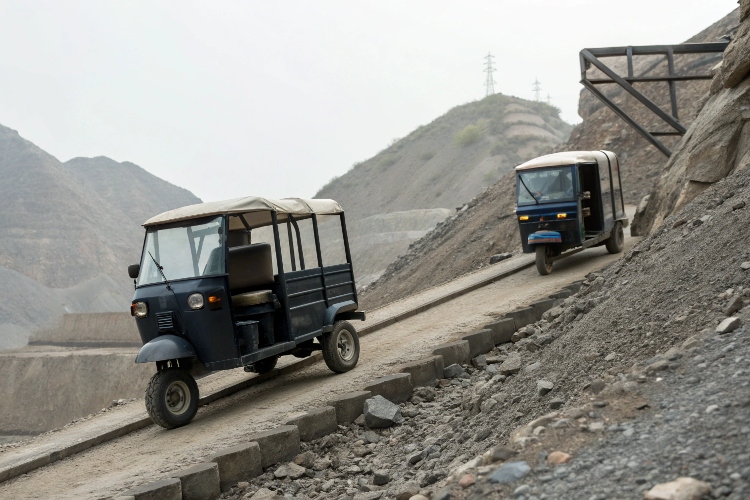
Buying the most expensive option isn't always the smart move. You must analyze where these electric tuk tuks will be driving.
Scenario A: The Rural Feeder Service.
If you are supplying vehicles to a rural area in Tanzania or a peri-urban route in the Philippines where the roads are unpaved and muddy, and drivers treat the rickshaw like a truck, stick to the Solid Rear Axle. The comfort difference of IRS will be lost on these roads, and the complexity of CV joints might be a liability if maintenance is poor. The Solid Axle is unkillable here.
Scenario B: The City Center or Tourist Shuttle.
If your client is a hotel in Thailand, a resort in the Maldives, or a modern taxi app company in a capital city, you must choose Independent Rear Suspension. These passengers are paying for a service. If the vehicle rattles their teeth, they won't use it again. In these scenarios, the vehicle isn't overloaded, and the roads are decent. The IRS provides a professional, car-like feel that elevates the brand image of the fleet. Don't save money here; the "luxury" feel is your selling point.
Xulosa
There is no absolute winner; Solid Axles offer unbeatable durability and value for tough conditions, while Independent Suspension delivers the comfort and stability required for premium passenger services.
