


Choosing the wrong e-rickshaw battery costs you money. Get it wrong, and you're stranded with a dead battery and no fares. How do you pick a battery that guarantees a full day of work and maximum profit?
For most commercial passenger e-rickshaws, a 72V 150Ah lithium-ion battery is the best all-around choice. It provides a reliable range of approximately 150 km, balancing cost with the performance needed for a full day of operation without needing a midday charge.
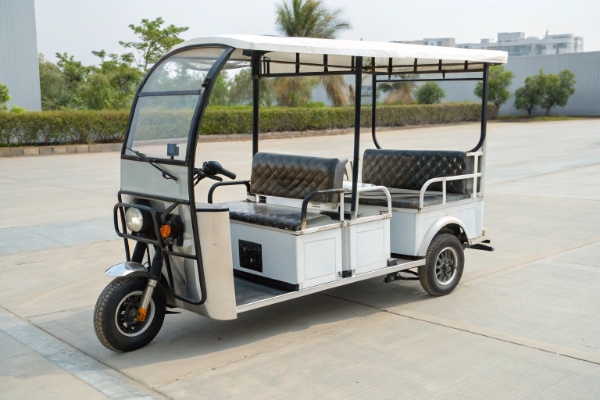
A sifatida supplier of these vehicles, I see operators struggle with this decision all the time. The "best" battery isn't always the biggest or the most expensive one. It’s a strategic business decision. To make the right choice, you need to understand how battery size directly impacts your daily earnings. Let's break it down.
How does battery size affect driving range and daily passenger operation?
You think you saved money on a smaller battery, but now you have to stop working by 3 PM. A small battery cuts your earning potential and leaves you falling short of a full day's work, losing you money in the long run.
A larger battery capacity directly increases your driving range. A basic 60V 100Ah battery might provide only 90 km, while a 72V 150Ah unit can push your daily range to 150 km, allowing you to complete more trips and earn more money.
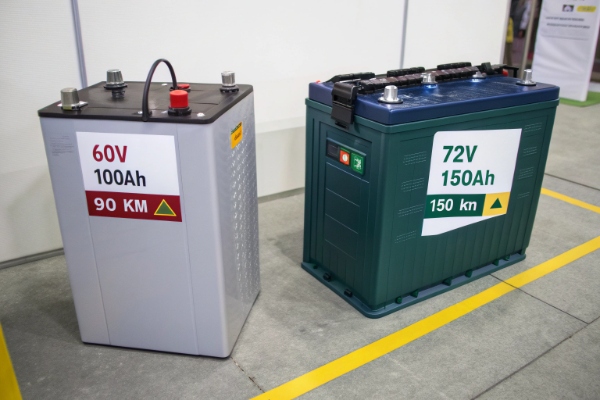
Bu electric motors in these passenger vehicles are powerful, typically between 3000W and 4000W. A small battery simply cannot provide enough energy to power these motors for a full commercial day. The relationship between capacity and range is straightforward—more capacity means a bigger "fuel tank." Here’s a quick look at what you can expect based on the common options I supply.
E-Rickshaw Range at a Glance
This table shows how capacity translates into real-world performance, helping you match a battery to your operational needs.
| Battery Specification | Estimated Driving Range | Eng yaxshi foydalanish |
|---|---|---|
| 60V 100Ah | ~ 90 km | Controlled environments, short routes (e.g., resort shuttles, factory campuses). |
| 72V 150Ah | ~150 km | Full-day commercial use, urban taxi services, mixed-use routes. |
| 72V 200Ah | ~180-190 km | Demanding routes, hilly terrain, long-distance operations, or a desire for extra assurance. |
As you can see, a larger capacity provides a longer range, which is the key to maximizing your time on the road and, therefore, your income.
What are the common battery options for passenger rickshaws?
You're tempted by the cheap price of an old-style battery. But soon you're dealing with poor performance, frequent replacements, and a heavy vehicle that struggles on hills. The initial savings quickly disappear.
While lead-acid batteries are cheaper upfront, lithium-ion is the only smart choice for a professional passenger rickshaw. They are lighter, last much longer, charge faster, and deliver consistent power, making them the standard for any serious commercial operation.
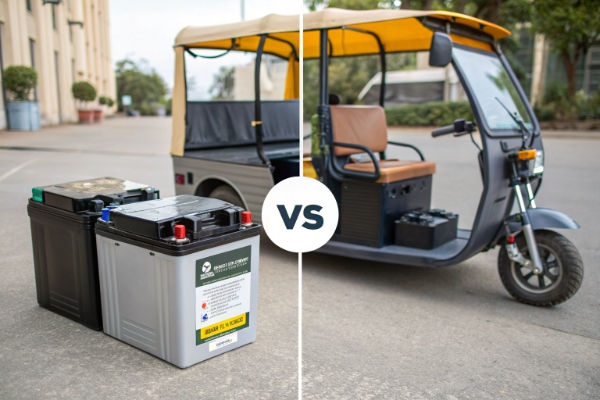
In my experience, there is no longer a real debate here. The long-term value of lithium-ion technology is so clear that it's the only option I recommend to my clients. The initial cost is higher, but the Mulkning umumiy qiymati is far lower.
Lead-Acid vs. Lithium-Ion: The Professional's Choice
This comparison makes it obvious why your business needs a lithium battery.
| O'ziga xos xususiyat | Qo'rg'oshin kislotasi batareyasi | Lithium-Ion Battery (LiFePO4) |
|---|---|---|
| Umrbod | 300-500 charge cycles | 2000-3000 charge cycles |
| Vazn | Very heavy, hurts performance and range | Up to 60% lighter, improving efficiency |
| Charging Time | 8-10 hours | 3-5 hours |
| Ijro etish | Voltage sags under load (slows down on hills) | Maintains stable voltage for consistent power |
| Parvarishlash | Requires regular check-ups (e.g., water levels) | Maintenance-free |
| Long-Term Cost | Cheaper upfront but needs frequent replacement | Higher initial cost but lasts 5-6 times longer |
Investing in a lithium-ion battery is investing in your business's uptime, reliability, and profitability.
How do route length, road conditions, and load influence the ideal capacity?
You bought a one-size-fits-all battery for your fleet. Now, your rickshaws on city routes run out of power, while your campus shuttles have expensive, oversized batteries they don't even need. This inefficiency is costing you money.
The ideal capacity is determined by your specific operating environment. For short, predictable routes like in a resort, a smaller 60V 100Ah battery is fine. For unpredictable open-road use, you need at least a 150 km range to operate profitably.
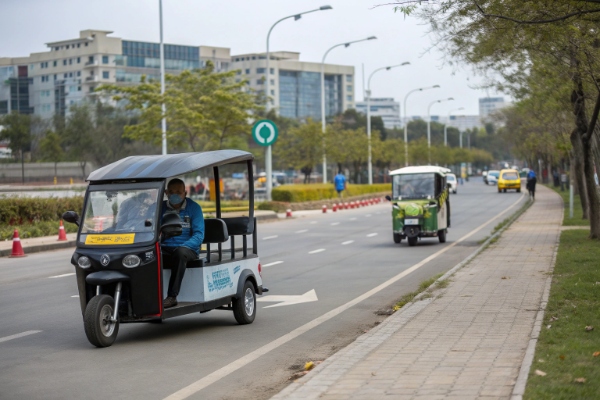
"Bigger is better" is not always true. The key is to match the battery to the job. I always advise my clients to analyze their daily routes before making a purchase. Let's look at two common scenarios.
Scenario 1: The Controlled-Area Shuttle
Imagine you are operating a shuttle service inside a large factory campus or a beach resort.
- Routes: Short, flat, and predictable. The total daily distance is unlikely to exceed 50-60 km.
- Loads: Consistent, with planned stops.
- Conclusion: A 60V 100Ah battery with a 90 km range is more than sufficient. It covers the daily requirement with a safe buffer. Buying a larger, more expensive battery here would be a waste of money that could be better invested elsewhere in your business.
Scenario 2: The Urban E-Rickshaw Taxi
Now, imagine you are operating as a taxi in a bustling city.
- Routes: Unpredictable, long distances, with potential for steep hills and heavy traffic.
- Loads: Vary constantly, from one passenger to a full vehicle.
- Conclusion: You need a battery that can handle a full day of uncertainty. A 72V 150Ah or 72V 200Ah is essential. The 150+ km range ensures you can accept any fare without worrying about getting stranded, maximizing your income potential. Anything less is simply not realistic for profitable operation.
How can operators balance cost, lifespan, and charging time when choosing a battery?
You're focused only on the low initial price of a smaller battery. But this ignores the hidden costs of more frequent charging, shorter lifespan, and lost revenue. This short-term thinking puts your business at a disadvantage.
The right balance comes from thinking about Total Cost of Ownership (TCO), not just the purchase price. A larger lithium battery costs more upfront but generates more revenue through less downtime, a longer service life, and greater daily range.
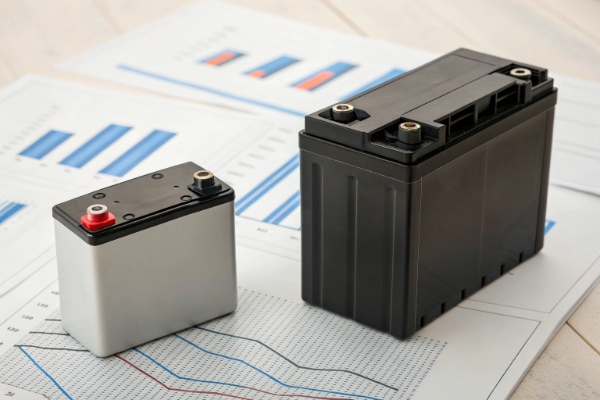
When you are buying a battery, you are buying an asset for your business. The goal is to choose the asset that makes you the most money over its lifetime. It’s not just about spending less; it’s about investing wisely. Bigger is not always better, but for commercial use, under-sizing your battery is a critical business error.
Your Decision-Making Framework
Use this checklist to think like a fleet manager and make a choice that boosts your bottom line.
| Omil | Lower Capacity (e.g., 60V 100Ah) | Higher Capacity (e.g., 72V 150Ah+) |
|---|---|---|
| Xarajat | Pastroq | Higher |
| Daily Earning Potential | Limited by range (~90 km) | Maximized with full-day range (150+ km) |
| Charging Downtime | May require midday charging (lost income) | Charges overnight, ready for a full day |
| Business Flexibility | Restricted to short, known routes | Can accept any fare, any distance |
| Uzoq muddatli qiymat | Good for specific, limited applications | Excellent for maximizing profit in most commercial settings |
The best choice depends on your budget and business model, but for anyone serious about running a passenger service, a battery that provides at least 150 km of range is the minimum requirement for success.
Xulosa
For most passenger tuk-tuk operations, a 72V 150Ah lithium-ion battery is the best investment. It delivers the range and reliability needed to maximize daily income and ensure long-term profitability.
