


Memilih kapasitas penumpang yang salah akan merusak pendapatan harian Anda. Anda akan kehilangan uang karena kursi kosong atau meninggalkan pelanggan yang membayar terdampar di jalan.
Keke listrik penumpang 4 tempat duduk cocok untuk jalan sempit dan anggaran lebih rendah. Mobil 7 tempat duduk memaksimalkan keuntungan di area sibuk. Jarak tempuh Anda sepenuhnya bergantung pada ukuran baterai yang Anda pilih, bukan ukuran kendaraan. Pilihan Anda sepenuhnya bergantung pada permintaan penumpang dan jalan lokal.
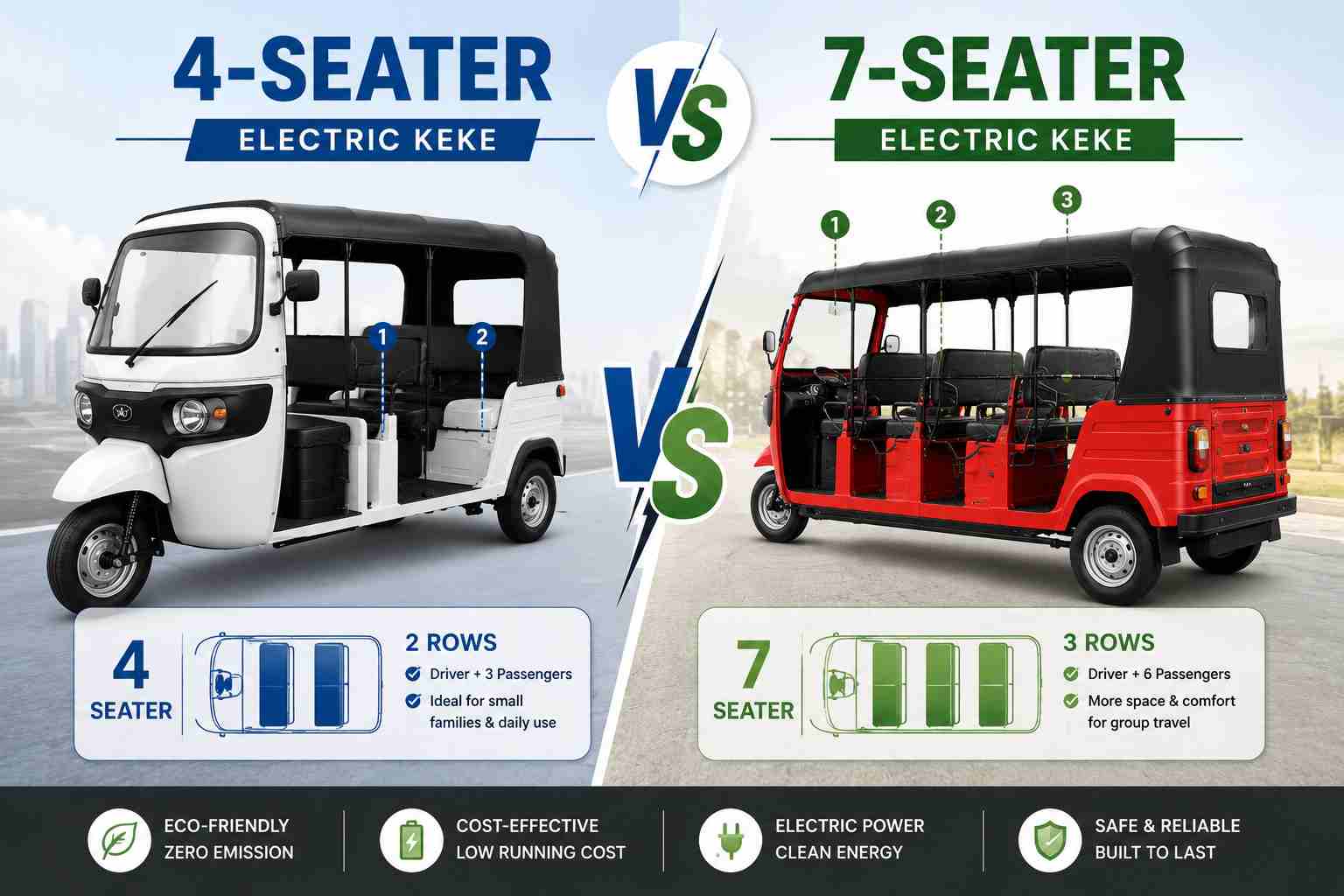
Dalam panduan ini, saya berbagi pengalaman pabrik saya untuk menjelaskan perbedaan bisnis nyata antara kedua model ini. Saya akan membantu distributor dan operator armada membuat pilihan yang paling menguntungkan untuk pasar lokal mereka.
Apa Perbedaan Utama Antara Kekes Elektrik 4 Tempat Duduk dan 7 Tempat Duduk?
Anda menatap lembar spesifikasi pabrik dan merasa sangat bingung. Membeli ukuran yang salah berarti pengemudi Anda akan kesulitan menavigasi lalu lintas harian dan mendapatkan uang.
Perbedaan utamanya adalah dimensi kendaraan, tenaga motor, dan bobot pengoperasian. Mobil 4 tempat duduk pendek dan kompak. Mobil 7 tempat duduk lebih panjang. Namun, jarak berkendara ditentukan sepenuhnya oleh kapasitas baterai yang Anda pasang, bukan oleh jumlah kursi.
Izinkan saya memperbaiki kesalahpahaman besar dalam bisnis ekspor tuk penumpang listrik. Banyak pembeli mengira mobil 7 tempat duduk yang lebih besar tentu saja memiliki jarak berkendara yang lebih pendek. Ini sepenuhnya salah. Jarak tempuh Anda ditentukan oleh ukuran baterai yang Anda beli. Kapasitas baterai menentukan jarak tempuh.
Sebuah 7 tempat duduk lebih berat dan membutuhkan motor 4000W atau 5000W yang lebih besar untuk membawa lebih banyak orang. Karena beratnya, maka konsumsi listriknya lebih banyak per kilometer. Jika Anda memasukkan baterai kecil ke dalam 7 tempat duduk, baterai akan cepat mati. Namun Anda cukup memperbaikinya dengan membeli baterai yang lebih besar. Jika Anda memasang baterai besar 60V 120Ah di mobil 7 tempat duduk, maka baterai tersebut akan mampu melaju sejauh 4 tempat duduk dengan baterai 60V 45Ah. Anda mengontrol kisaran melalui anggaran Anda.
Kapasitas Penumpang dan Ukuran Kendaraan
Ukuran fisik mengubah cara Anda mengemudi. Sebuah 4 tempat duduk memiliki satu baris di belakang pengemudi. Dapat diputar dengan mudah di ruang kecil. Sebuah 7 tempat duduk memiliki dua baris atau bangku panjang. Perlu jalan lebar untuk memutar balik.
Biaya Pembelian dan Pengeluaran Harian
Investasi awal untuk mobil 7 tempat duduk lebih tinggi. Anda membayar untuk lebih banyak baja, motor yang lebih besar, dan baterai yang lebih besar untuk mempertahankan jangkauan yang Anda perlukan.
| Fitur | Model 4 Tempat Duduk | Model 7 Tempat Duduk |
|---|---|---|
| Ruang Penumpang | 3 hingga 4 orang | 6 hingga 7 orang |
| Ukuran Kendaraan | Bingkai kompak dan pendek | Bingkai panjang dan memanjang |
| Jarak Mengemudi | Ditentukan oleh ukuran baterai | Ditentukan oleh ukuran baterai |
| Kebutuhan Tenaga | 1500W-3000W | Motor 4000W hingga 5000W |
| Biaya Awal | Lebih rendah | Lebih tinggi |
Kapan Keke Listrik Penumpang 4 Tempat Duduk Menjadi Pilihan Lebih Baik?
Kursi kosong menghancurkan margin keuntungan Anda setiap hari. Menyebarkan kendaraan besar untuk satu penumpang akan membuang-buang energi mahal dan memperlambat pengemudi Anda.
Keke listrik penumpang 4 tempat duduk adalah pilihan terbaik untuk kota kecil, gang perumahan sempit, dan transportasi jarak pendek. Ini menawarkan pembeli biaya pembelian yang jauh lebih rendah, perawatan yang lebih mudah, dan laba atas investasi yang sangat cepat.
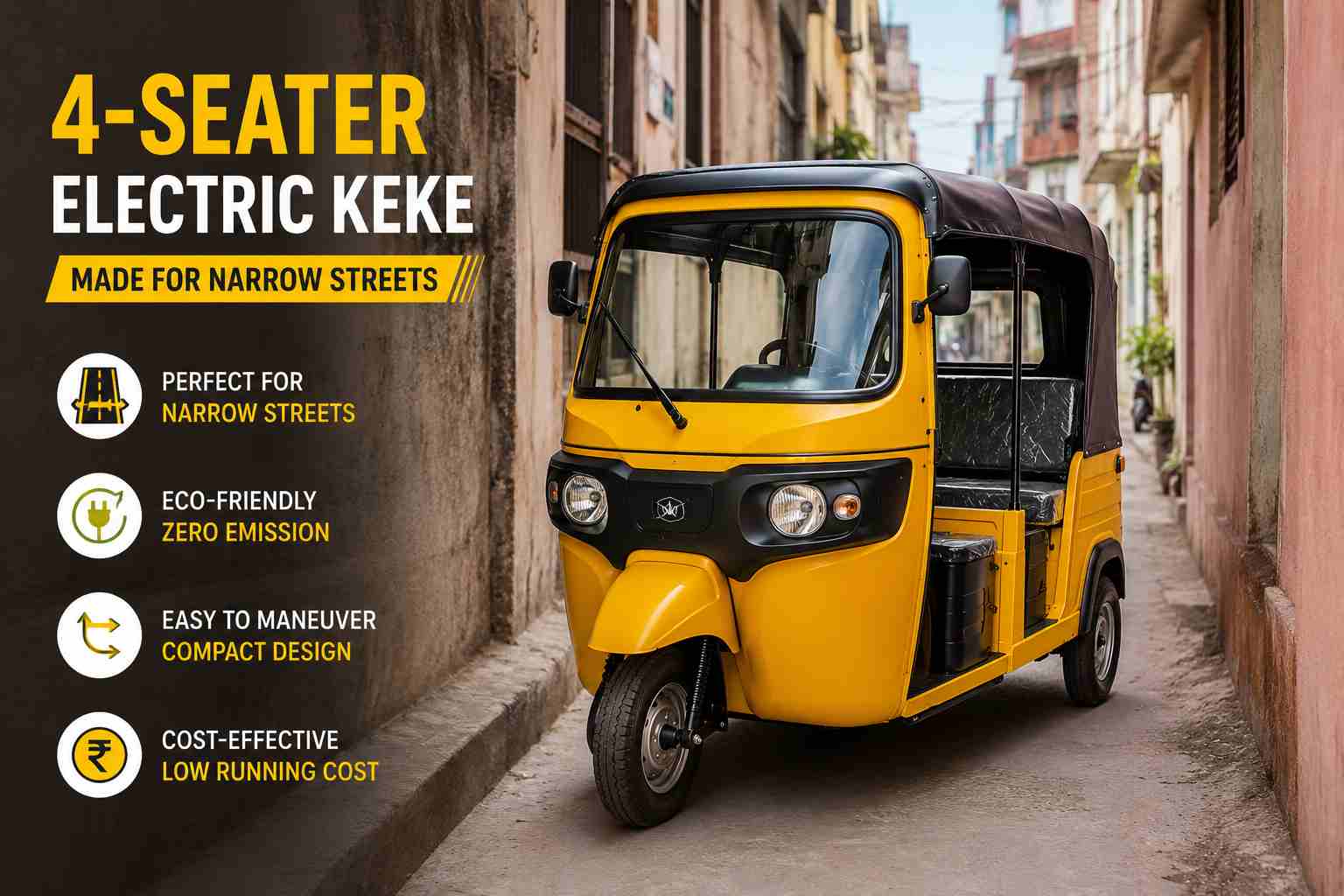
Saya selalu merekomendasikan model 4 tempat duduk untuk pasar tertentu. Kendaraan kompak ini mendominasi kota-kota kecil dan komunitas pemukiman padat. Di banyak negara berkembang, jalan lokal hanyalah gang-gang kecil yang kotor. Transportasi penumpang jarak pendek tumbuh subur di sini. Mobil kompak dengan 4 tempat duduk ini dengan mudah memutar balik dan menghindari lalu lintas padat tanpa terjebak.
Pasar Ideal untuk Model Kompak
Jika Anda menjual di kota kecil, pelanggan Anda membutuhkan ketangkasan. Mereka mengantar orang dari pasar lokal ke rumah mereka. Perjalanannya singkat. Kendaraan besar tidak ada gunanya di sini.
Keuntungan bagi Importir dan Distributor
Anda mendapatkan keuntungan besar dengan model ini. Anda menghadapi biaya pembelian yang lebih rendah di pabrik. Artinya, Anda dapat membeli lebih banyak unit dalam satu kontainer pengiriman. Anda juga menawarkan perawatan yang lebih mudah kepada pembeli lokal Anda. Motor standar yang lebih kecil harganya murah untuk diganti. Harga yang lebih rendah ini menghasilkan laba atas investasi yang lebih cepat bagi pengemudi.
Skenario Bisnis yang Khas
Kami melihat model ini berhasil dalam perjalanan sehari-hari. Orang membutuhkan perjalanan cepat dari halte bus. Layanan antar-jemput komunitas menggunakannya di dalam kompleks apartemen besar. Ini adalah alat terbaik untuk transportasi jarak jauh karena murah dan sangat fleksibel.
Kapan Keke Listrik Penumpang 7 Tempat Duduk Lebih Masuk Akal?
Membiarkan pelanggan yang membayar menunggu di trotoar akan merusak reputasi bisnis Anda. Penggunaan kendaraan kecil untuk memindahkan rombongan wisatawan dalam jumlah besar akan menimbulkan kemarahan penumpang dan kehilangan tarif.
Keke listrik penumpang 7 tempat duduk sangat ideal untuk daerah perkotaan dengan kepadatan tinggi, tujuan wisata, dan antar-jemput kampus. Ini menyediakan kapasitas penumpang yang sangat besar, yang sangat meningkatkan pendapatan harian Anda per perjalanan dan meningkatkan efisiensi armada secara keseluruhan.
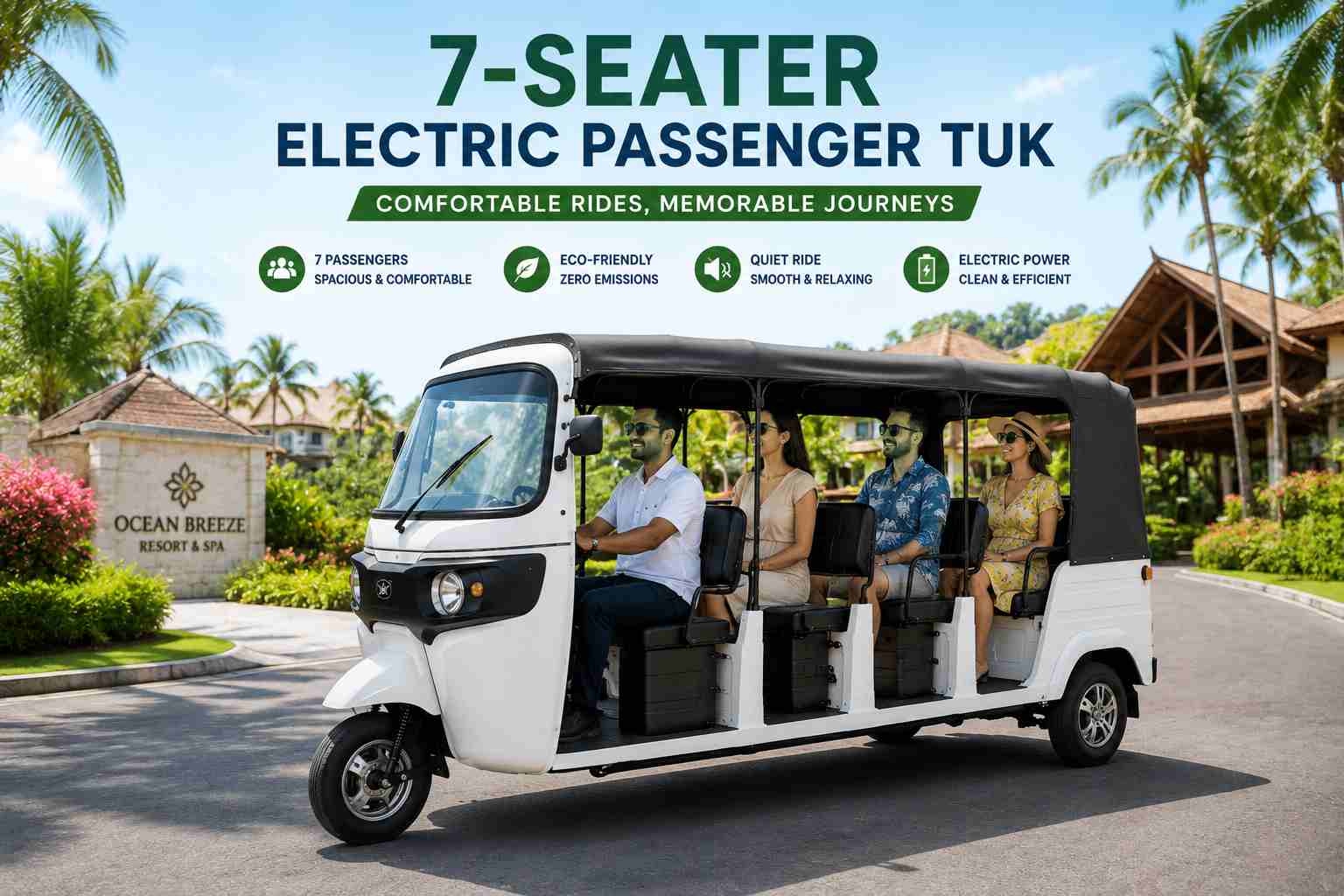
Pasar ideal untuk model 7 tempat duduk terlihat sangat berbeda dari zona kompak. Kendaraan panjang ini termasuk dalam wilayah perkotaan dengan kepadatan tinggi. Anda melihat ratusan orang menunggu di stasiun transit di ibu kota. Mereka juga cocok untuk tujuan wisata. Keluarga ingin bepergian bersama dan menolak untuk berpisah menjadi dua mobil terpisah. Layanan antar-jemput di universitas-universitas besar sangat bergantung pada ukuran yang luas ini untuk memindahkan mahasiswa antar kelas.
Keuntungan Bisnis bagi Pemilik Armada
Manfaat bisnisnya sangat jelas. Anda mendapatkan kapasitas penumpang yang jauh lebih tinggi. Hal ini secara langsung menciptakan peningkatan potensi pendapatan per perjalanan. Seorang pengemudi mengumpulkan enam tarif, bukan tiga. Hal ini menghasilkan efisiensi armada yang lebih baik. Anda memerlukan lebih sedikit pengemudi untuk memindahkan jumlah orang yang sama.
Hal yang Perlu Dipertimbangkan Sebelum Membeli
Anda harus mempertimbangkan fakta lokal sebelum memilih mobil 7 tempat duduk. Anda harus mengevaluasi kondisi jalan Anda. Kendaraan panjang ini tidak bisa berputar di gang sempit. Anda harus memeriksa peraturan setempat. Beberapa kota membatasi ukuran kendaraan komersial roda tiga. Ingat aturan baterai. Anda harus mengeluarkan uang ekstra untuk membeli baterai yang sangat besar untuk menjamin kendaraan berat ini dapat melaju sepanjang hari.
Faktor Kunci Apa yang Harus Anda Pertimbangkan Sebelum Membuat Keputusan?
Menebak apa yang dibutuhkan pasar Anda akan membuat Anda kehabisan persediaan. Anda harus mengandalkan data keras dan perhitungan yang jelas sebelum Anda menandatangani pesanan pabrik dalam jumlah besar.
Sebelum membeli, analisis rata-rata permintaan penumpang, ukur lebar jalan setempat, dan periksa peraturan pemerintah. Anda harus menyeimbangkan total anggaran investasi Anda dengan biaya operasional yang diharapkan untuk menentukan periode pengembalian yang tepat.
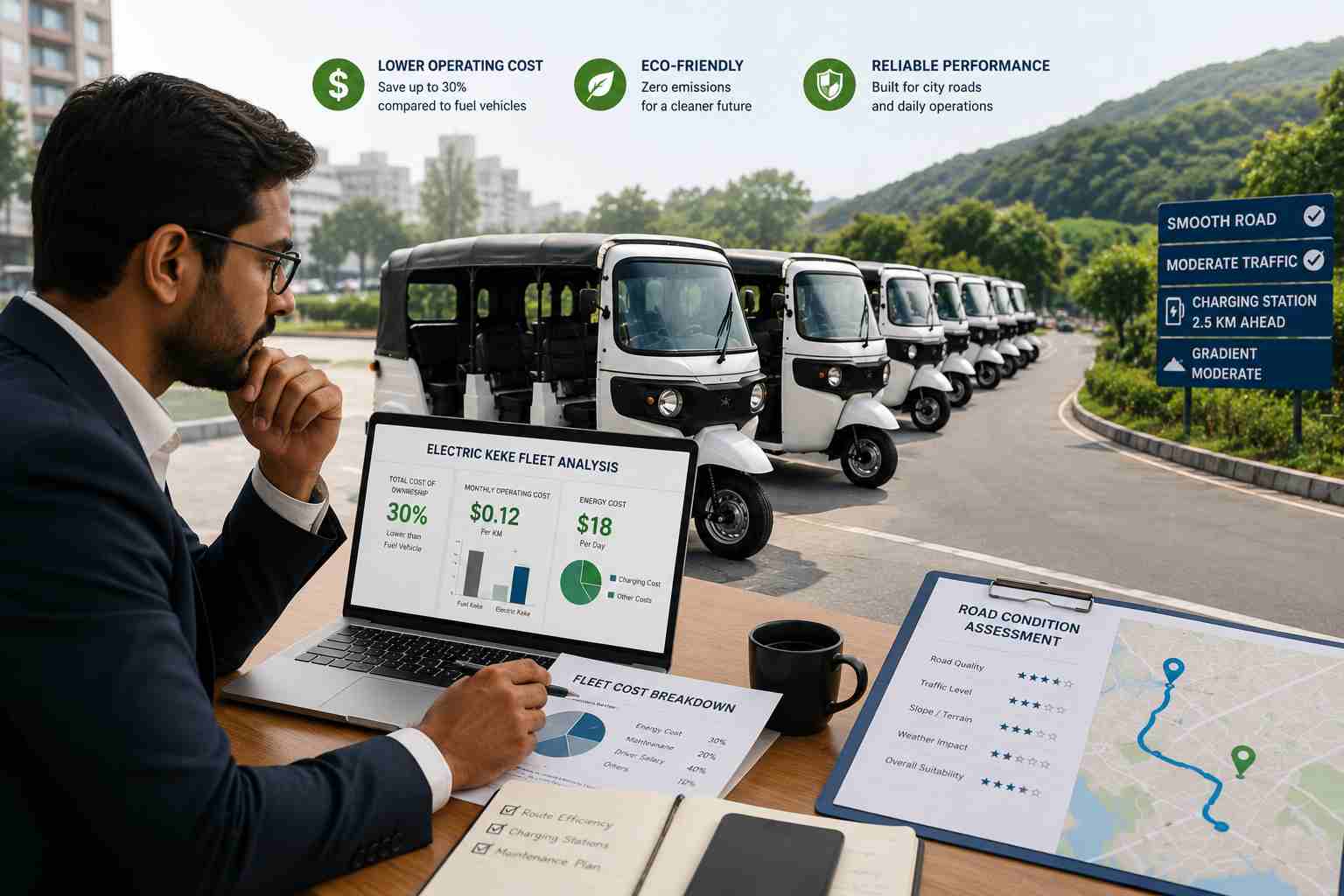
Anda harus memulai rencana bisnis Anda dengan analisis permintaan penumpang yang ketat. Hitung rata-rata penumpang per perjalanan di kota target Anda. Jika kebanyakan orang bepergian sendirian, maka membeli mobil 7 kursi hanya membuang-buang uang. Lihatlah permintaan pada jam sibuk dan fluktuasi musiman. Kota wisata membutuhkan kendaraan besar di musim panas, namun sepi di musim dingin.
Kondisi Jalan dan Infrastruktur Setempat
Anda harus mengukur lebar jalan sebenarnya di zona operasi Anda. Bayangkan kemacetan lalu lintas setiap hari. Kendaraan besar yang terjebak kemacetan tidak menghasilkan uang. Periksa radius belok yang diperlukan untuk rute spesifik Anda.
Peraturan Pemerintah dan Perizinan
Peraturan pemerintah sering kali menentukan keputusan akhir untuk Anda. Periksa batas penumpang resmi untuk kendaraan roda tiga di negara Anda. Verifikasi persyaratan lisensi komersial. Beberapa polisi lalu lintas setempat melarang sepenuhnya model tuk listrik penumpang besar.
Anggaran dan ROI yang Diharapkan
Anda harus menghitung anggaran Anda secara akurat. Lihatlah total investasi Anda. Ingatlah bahwa mobil 7 tempat duduk membutuhkan baterai yang jauh lebih besar agar sesuai dengan jangkauan berkendara 4 tempat duduk. Petakan periode pengembalian yang Anda harapkan. Anda harus memastikan pendapatan penumpang tambahan menutupi biaya baterai dan motor yang lebih tinggi.
Keke Listrik Penumpang Mana yang Lebih Baik untuk Berbagai Model Bisnis?
Meniru pilihan armada perusahaan lain merupakan strategi yang sangat berbahaya. Model bisnis spesifik Anda memerlukan ukuran kendaraan yang dipilih dengan cermat untuk memaksimalkan keuntungan harian Anda.
Distributor lebih memilih model 4 tempat duduk untuk penjualan eceran yang cepat. Operator armada lebih memilih 7 kursi untuk memaksimalkan pendapatan perjalanan. Proyek transportasi pemerintah memilih 7 tempat duduk untuk memindahkan kelompok besar secara efisien melalui koridor umum yang ditentukan.
Saya berurusan dengan banyak pembeli berbeda di pabrik saya. Distributor kendaraan memiliki satu tujuan utama. Mereka menginginkan volume penjualan yang cepat. Menjual ke pemilik-operator individu berarti 4 tempat duduk adalah produk yang bergerak paling cepat. Ini memiliki harga masuk yang rendah untuk satu pengemudi. Mereka dapat mengisi baterai kecil pada colokan listrik biasa di rumah.
Operator Armada dan Volume Tinggi
Operator armada mengelola pengemudi sewaan mereka sendiri. Fokus mereka adalah pendapatan rute harian. Mobil berkapasitas 7 tempat duduk memaksimalkan pendapatan dari satu pergantian pengemudi di area dengan kepadatan tinggi. Mereka dengan senang hati membayar baterai yang lebih besar karena tarif tambahan akan melunasinya dengan cepat.
Proyek Pemerintah dan Pariwisata
Penggantian angkutan umum pemerintah perlu memindahkan kerumunan orang secara maksimal pada jam sibuk pagi hari. Hal ini mengurangi lalu lintas secara keseluruhan di jalanan. Bisnis pariwisata memiliki aturan yang sama. Mobil berkapasitas 7 tempat duduk ini wajib bagi mereka untuk menyatukan grup wisata.
| Jenis bisnis | Model yang Direkomendasikan | Alasan Bisnis Nyata |
|---|---|---|
| Distributor | 4 Tempat Duduk | Biaya masuk lebih rendah, penjualan lebih cepat |
| Operator Armada | 7 Tempat Duduk | Volume penumpang lebih tinggi, pendapatan lebih banyak |
| Resor Wisata | 7 Tempat Duduk | Menyatukan kelompok, pengalaman yang lebih baik |
| Antar-Jemput Komunitas | 4 Tempat Duduk | Putar balik yang mudah di jalan-jalan lokal yang sempit |
Kesalahan Umum Apa yang Dilakukan Pembeli Saat Memilih Kapasitas Penumpang?
Membeli kendaraan armada hanya berdasarkan emosi menyebabkan kehancuran finansial. Banyak importir baru melakukan kesalahan kritis yang langsung menghancurkan arus kas harian mereka.
Pembeli sering kali berasumsi lebih besar selalu lebih baik dan mengabaikan permintaan pasar sebenarnya. Mereka salah memahami batasan baterai, mengira ukuran kendaraan menurunkan jangkauan, dan hanya fokus pada harga beli yang murah daripada biaya pengoperasian harian.
Saya melihat pembeli jatuh ke dalam perangkap yang sama setiap tahun. Kesalahan paling umum adalah berasumsi bahwa lebih besar selalu berarti lebih baik. Pembeli melihat mobil 7 tempat duduk yang besar dan menganggapnya terlihat lebih mengesankan. Kendaraan kosong yang mengesankan kehilangan uang setiap menitnya. Hal ini secara langsung mengarah pada pengabaian permintaan pasar lokal. Jika budaya kota Anda melibatkan orang-orang yang bepergian sendirian, kursi tambahan tersebut akan tetap kosong selamanya.
Kesalahpahaman Baterai dan Jangkauan
Kesalahan teknis terbesar adalah kegagalan memahami kapasitas baterai. Pembeli membeli mobil 7 tempat duduk yang berat tetapi mencoba menghemat uang dengan menggunakan baterai kecil. Kemudian mereka mengeluh bahwa jangkauannya terlalu pendek. Ukuran kendaraan tidak mematikan jangkauan. Baterai murah mematikan jangkauan. Anda harus mencocokkan ukuran baterai dengan berat kendaraan.
Hanya Berfokus pada Harga Pembelian
Pembeli gagal karena hanya berfokus pada harga beli. Sebuah pabrik mungkin menawarkan diskon untuk mobil 7 tempat duduk yang besar. Sepertinya banyak hal pada file PDF. Namun jika jalan lokal Anda terlalu sempit untuk bisa berputar, diskon tersebut tidak ada gunanya.
Rekomendasi Akhir: Mana yang Harus Anda Pilih?
Anda memiliki semua fakta dan detail teknisnya. Sekarang Anda harus membuat keputusan bisnis tegas yang akan menentukan kesuksesan armada Anda di masa depan.
Pilih mobil 4 tempat duduk untuk investasi lebih rendah, jalan sempit, dan pengoperasian fleksibel di kota kecil. Pilih mobil 7 tempat duduk jika Anda melayani area dengan permintaan penumpang tinggi, transportasi wisata, atau rute komersial yang membutuhkan pendapatan maksimal.
Saya memberi tahu klien saya untuk memilih keke listrik penumpang 4 tempat duduk jika mereka memiliki batasan anggaran yang ketat dan lebih rendah. Sangat cocok jika target pasar Anda terdiri dari kota-kota kecil. Anda membutuhkan model ini untuk gang sempit dan jalan sempit. Pengemudi Anda mendapatkan pengoperasian harian yang fleksibel dan menghindari lalu lintas dengan mudah. Ini menjaga biaya listrik dan pemeliharaan harian Anda tetap minimum. Anda dapat menggunakan baterai yang lebih kecil, lebih murah, dan tetap mendapatkan jarak berkendara yang jauh.
Anda sebaiknya memilih mobil berkapasitas 7 tempat duduk jika kota Anda memiliki permintaan penumpang harian yang sangat tinggi. Ia termasuk dalam operasi armada profesional yang menjalankan rute tetap di jalan utama yang lebar. Jika Anda mengelola transportasi wisata, ini adalah pilihan terbaik Anda. Ini menjamin pendapatan per perjalanan yang jauh lebih tinggi. Ingat, Anda harus berinvestasi dalam baterai besar untuk memastikan jangkauannya tetap tinggi. Sesuaikan kendaraan dengan jalan dan anggaran Anda.
Kesimpulan
Tidak ada pilihan terbaik yang universal. Keke listrik penumpang yang tepat bergantung pada pasar lokal Anda, ukuran jalan, anggaran baterai, dan permintaan penumpang. Mengevaluasi faktor-faktor ini dengan hati-hati akan memaksimalkan profitabilitas Anda dan menjamin pertumbuhan bisnis yang stabil.
Mencari keke listrik penumpang yang tepat untuk pasar Anda? Hubungi tim kami untuk mendiskusikan kebutuhan bisnis Anda, dan kami akan membantu Anda memilih antara model 4 tempat duduk dan 7 tempat duduk berdasarkan target pelanggan Anda.
