


Choosing the wrong charging method can severely limit how efficiently your electric passenger tuk operates. This mistake will reduce your daily revenue and upset your drivers.
Fast charging reduces downtime and increases fleet productivity, while slow charging is more cost-effective and easier to deploy. The best option depends heavily on your business model, budget, and local grid infrastructure.
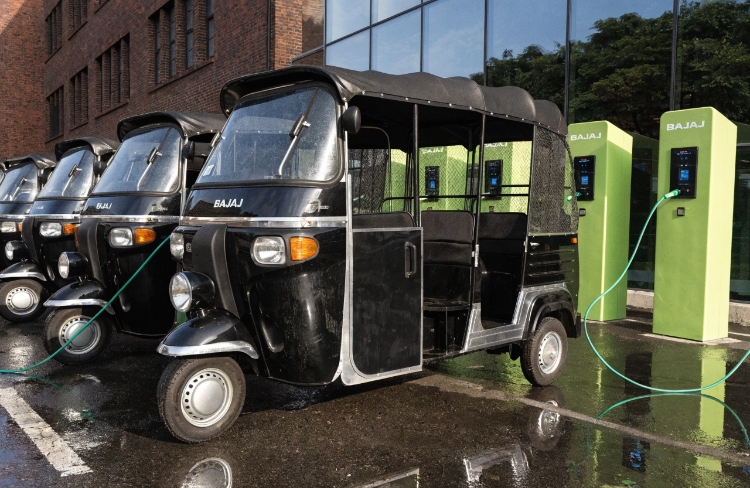
In this guide, I compare fast and slow charging for electric passenger tricycles. I will help distributors, fleet operators, and project buyers make the right decision. You will see how each method impacts your daily operations. We will look at real factory experience to guide your choice.
1. What Is Slow Charging for Electric Passenger Tricycles?
You need a reliable way to power your vehicles. You might worry about finding expensive power stations for your new electric tuk tuk fleet.
Slow charging uses standard 220V or 230V wall outlets to power an electric passenger tricycle. It relies on a portable on-board charger. This method takes 6 to 10 hours. It is the most common setup for overnight charging in basic transport businesses.
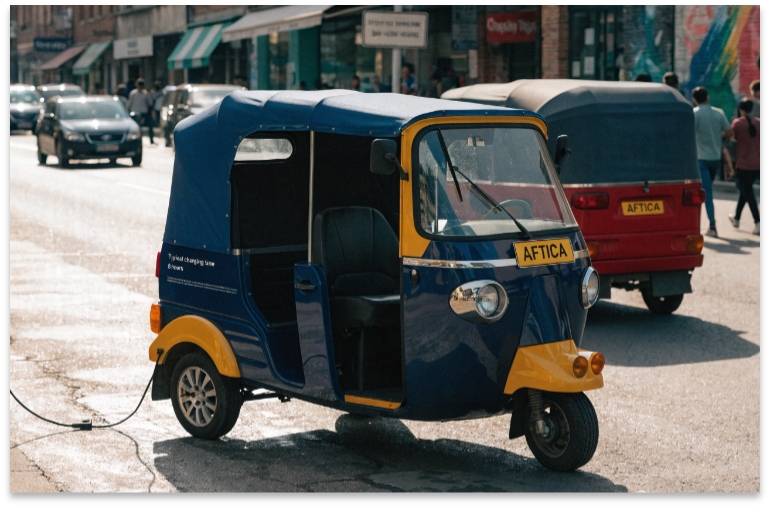
Slow charging is widely used in entry-level projects because it requires no additional infrastructure. You simply plug the electric passenger tuk into a normal wall socket. The charger comes with the vehicle. You do not need to build special charging stations. You do not need to hire engineers to upgrade your garage wiring. This simplicity makes slow charging extremely popular in developing markets. Drivers finish their shifts at night. They park the electric passenger tricycle at home. They plug it into the wall just like a mobile phone. The vehicle charges slowly while they sleep. By morning, the battery is completely full. The 6 to 10 hours of charging time fits perfectly into a normal daily human schedule. I always recommend this method for first-time importers. It carries the lowest risk. It protects the battery cells from heat damage. Slow charging extends the total life of your battery pack. It keeps your maintenance costs very low during your first year of operation.
2. What Is Fast Charging for Electric Tuk Tuks?
You want your vehicles driving on the road, not sitting in a garage. Long charging times can ruin a high-frequency taxi business model.
Fast charging pushes high amounts of power into the battery using a commercial 380V power supply. It requires special external charging stations. This method fills the battery in just 1 to 2 hours, making it perfect for continuous daily operations.
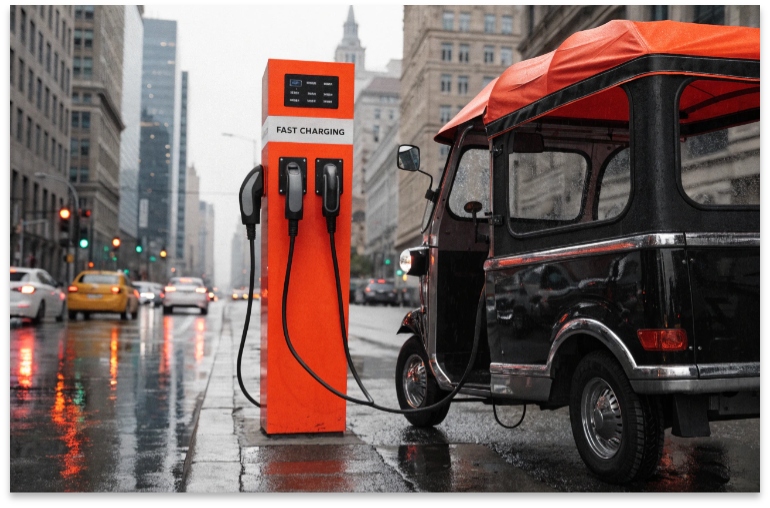
Fast charging is typically used in fleet operations where minimizing downtime is critical. You cannot wait 8 hours for a battery to charge if you run a 24-hour taxi service. You need the electric passenger tuk back on the road immediately. Fast charging solves this problem. You install a dedicated fast-charging pile in your central depot. A driver comes in for a lunch break. They plug the electric passenger tricycle into the high-voltage station. In just one hour, the battery jumps from 20 percent to 80 percent. The driver finishes lunch and goes back to work. This method dramatically increases how many trips one vehicle can make in a single day. However, fast charging requires heavy preparation. You must have access to a stable 380V industrial power grid. You must also buy vehicles equipped with special batteries and heavy-duty internal wiring. Standard batteries will melt if you connect them to a fast charger. I see many buyers ignore this technical requirement. They try to cut corners and ruin their fleets. You must plan this setup carefully with your factory.
3. Fast Charging vs Slow Charging: Key Differences
You face a difficult choice between these two distinct technologies. You need to see the clear facts before you spend your project budget.
The main differences lie in voltage, time, cost, and infrastructure. Slow charging is cheap and uses regular outlets. Fast charging is expensive and needs 380V commercial stations. The right choice depends entirely on your specific market demands.
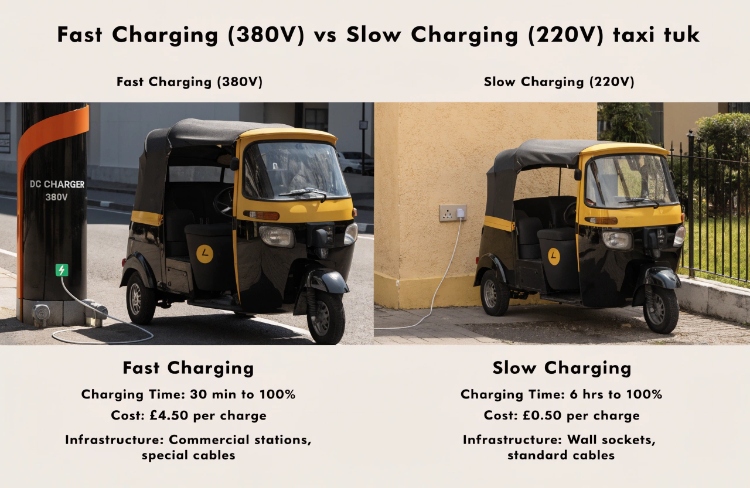
The choice is not about which is better, but which fits your business model. I use a simple table to show B2B buyers the exact differences. This helps them understand the financial and technical gaps between the two options.
| Recurso | Slow Charging | Fast Charging |
|---|---|---|
| Voltage | 220V / 230V | 380V Industrial Power |
| Tempo de carregamento | 6 – 10 hours | 1 – 2 hours |
| Infrastructure | Not required (Wall Socket) | Required (Charging Station) |
| Custo | Baixo | Alto |
| Melhor para | Small-scale use & overnight | Fleet & commercial operations |
You must look at this table and think about your city. Do you have 380V power easily available? If not, fast charging is impossible for your electric passenger tuk project. Do your drivers work 12 hours and sleep 12 hours? If yes, you do not need fast charging. Slow charging will work perfectly. You only need fast charging if your electric passenger tricycle runs almost non-stop. Every fleet is different. You must match the technology to your actual daily schedule.
4. Advantages and Limitations of Each Option
You cannot buy a perfect system. Every technical choice brings both strong benefits and hidden problems to your daily business operations.
Slow charging offers low costs and easy setup, but limits your vehicle's daily operating hours. Fast charging delivers short downtime and high utilization, but demands a massive initial investment in equipment and grid upgrades.
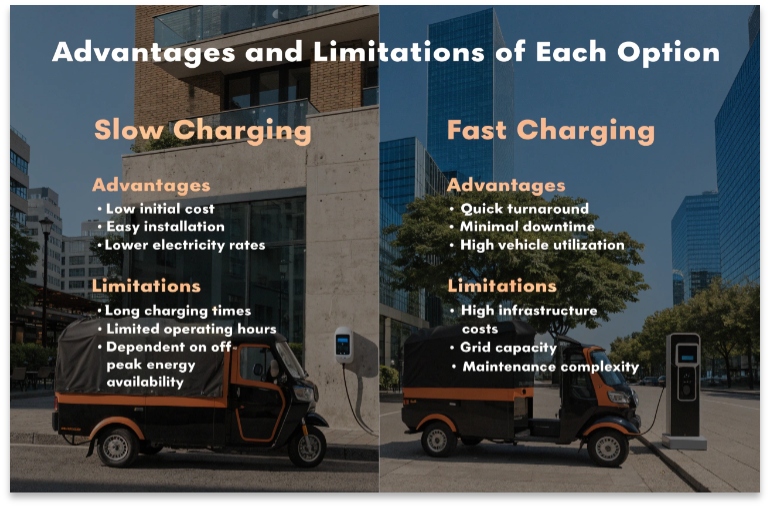
We must break down the real advantages and limitations of each method. Let us start with slow charging. The biggest advantage is the low cost. You do not buy extra equipment. The setup is incredibly easy. Any driver can plug the electric passenger tuk into a standard home outlet. However, it has a major limitation. The long charging time means the vehicle must stop working for a large part of the day. You cannot share one vehicle easily between two full-time drivers.
Now let us look at fast charging. The main advantage is the short downtime. Your electric passenger tricycle spends more hours carrying paying customers. This higher utilization brings in more revenue per vehicle. You can run multiple driver shifts on the same machine. But the limitations are severe. You face a much higher initial investment. Fast charging stations are expensive. Upgrading your depot to handle 380V power costs a lot of money. The fast-charging process also creates high heat. This heat can shorten the overall lifespan of your battery cells over time.
5. Which Charging Option Is Best for Different Business Models?
You must align your technical choices with your specific customer base. A mismatch here will destroy your operational budget and ruin your project.
Small importers should choose slow charging for its simplicity and low risk. Large fleet operators need fast charging to maximize daily shifts. Government projects usually require a hybrid solution to balance high usage with limited local infrastructure.
I categorize B2B buyers into three groups to help them decide. First, we have small importers and local distributors. You sell the electric passenger tuk to individual owner-operators. These single drivers park at home. For this group, slow charging is the only logical choice. It keeps the vehicle price low and requires zero installation.
Second, we have commercial fleet operators. You own the vehicles and hire drivers for a 24-hour taxi app service. Your profit depends on constant movement. For you, fast charging is essential. The high upfront cost pays for itself because each electric passenger tricycle completes twice as many trips per day. You maximize your daily revenue.
Third, we serve government or NGO transport projects. These projects often operate in difficult regions. They need high vehicle availability but suffer from weak local power grids. I usually recommend a hybrid solution here. You buy standard vehicles with slow chargers for overnight use. Then, you install a few fast-charging stations at central bus terminals for emergency daytime top-ups. This balances operational speed with realistic local grid limits.
6. Key Factors to Consider Before Choosing a Charging Method
You need a clear checklist before you place a factory order. Guessing your local market conditions will lead to useless inventory sitting in your warehouse.
You must evaluate your total project size and your available budget. You must check your local electricity conditions to see if 380V power is legal and available. You must calculate the daily usage frequency of your vehicles.
You must consider four key factors before you buy an electric passenger tuk fleet. First, look at your project size. If you only import one container, do not buy fast chargers. The infrastructure cost is too high for a small number of vehicles. Second, you must investigate your electricity conditions. Go to your local power company. Ask them if you can install a 380V line in your commercial garage. Many cities restrict high-voltage lines in residential areas. If you cannot get the power, you cannot use fast chargers.
Third, you must calculate your exact budget. Fast charging requires expensive stations and upgraded vehicle batteries. You might find that buying two slow-charging vehicles is cheaper than buying one fast-charging vehicle and its station. Fourth, analyze your usage frequency. How many kilometers does an electric passenger tricycle drive in your city every day? If the daily route is short, a slow overnight charge gives you more than enough power. You only need to upgrade if your drivers exhaust the battery before their shift ends.
7. Final Recommendation for B2B Buyers
You have all the facts now. You just need to make a firm decision and start building your electric transport business with confidence.
Small scale operations and individual sales rely on slow charging. Commercial fleet operations require fast charging to stay competitive. Always match your charging strategy to your daily business operations and local grid capacity.
My final recommendation is simple. Do not chase advanced technology just because it sounds impressive. You must make a practical business decision. If you plan a small-scale import business, stick to slow charging. It is safe, cheap, and universally understood by drivers. You will sell the electric passenger tuk much faster if the driver does not need to worry about special plugs.
If you plan a large commercial operation, you must invest in fast charging. The math demands it. You cannot afford to have 50 vehicles sitting idle for 10 hours every single day. The increased daily revenue will cover the high equipment costs. We deal with these exact scenarios every day at the factory. We know how to match the battery, the charger, and the vehicle to your specific city. If you are planning an electric tuk tuk project, we can help you choose the most suitable charging solution based on your business model and local conditions.
Conclusão
Fast charging maximizes fleet productivity, while slow charging offers unbeatable cost savings and simplicity. You must choose the system that perfectly matches your daily operating model and local power grid.
