


Biaya bahan bakar yang tinggi dan perawatan terus-menerus untuk tuk-tuk berbahan bakar bensin menggerogoti keuntungan Anda. Setiap hari, uang terbuang sia-sia di pompa bensin dan di garasi.
Tuk-tuk listrik lebih murah untuk dioperasikan karena biaya energi hariannya jauh lebih rendah dan memerlukan perawatan yang minimal. Penghematan bahan bakar dan perbaikan dengan cepat melebihi harga pembelian awal yang lebih tinggi, menjadikannya investasi jangka panjang yang lebih menguntungkan untuk armada mana pun.
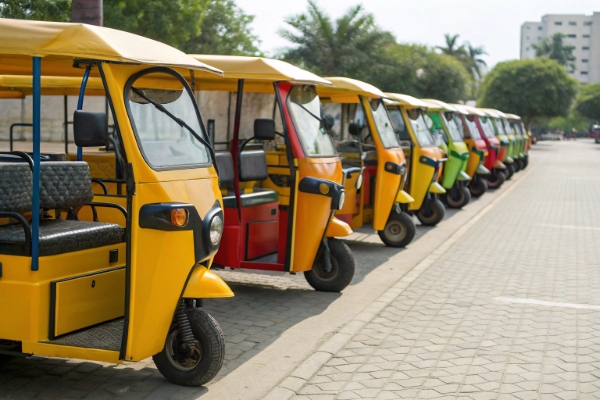
Banyak klien saya hanya fokus pada harga stiker ketika membandingkan model listrik dan bensin. Saya selalu mengatakan kepada mereka bahwa ini adalah kesalahan. Pembelian awal hanyalah salah satu bagian dari cerita. Biaya sebenarnya sebuah kendaraan adalah apa yang Anda keluarkan untuk menjaganya tetap berjalan hari demi hari. Jika Anda melihat total biaya kepemilikan (TCO), perhitungannya jelas lebih mengutamakan listrik. Mari kita uraikan biaya sebenarnya untuk menunjukkan alasannya.
Apa perbedaan biaya energi harian antara mengisi daya tuk listrik dan mengisi bahan bakar model bensin?
Harga bahan bakar yang tidak dapat diprediksi membuat anggaran armada Anda tidak dapat dianggarkan. Lonjakan harga yang tiba-tiba dapat menghapus keuntungan bulanan Anda, sehingga Anda tidak dapat menunjukkan apa pun atas pekerjaan Anda.
Mengisi daya tuk-tuk listrik biasanya 70-80% lebih murah dibandingkan mengisi bahan bakar model bensin untuk menempuh jarak yang sama. Dengan tarif listrik yang stabil, Anda dapat memperkirakan biaya operasional harian secara akurat, sementara harga bahan bakar terus berubah dan mengurangi pendapatan Anda.
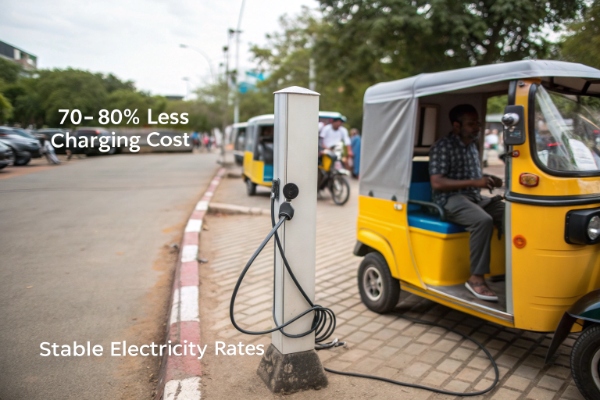
The biggest and most immediate saving comes from "fuel." Untuk tuk-tuk berbahan bakar bensin, itu berarti perjalanan harian ke pompa bensin. Untuk yang listrik, cukup dengan mengisi daya semalaman. Perbedaan biaya sangat besar. Saya telah bekerja dengan klien di Filipina dan Kenya yang mengalami penurunan pengeluaran energi harian lebih dari dua pertiga setelah beralih. Sebab, listrik tidak hanya lebih murah per kilometernya, tapi juga lebih stabil harganya.
Mari kita lihat perhitungan sederhana di dunia nyata untuk sebuah kendaraan yang berlari sejauh 100 kilometer sehari.
Biaya Energi Harian: Perbandingan Langsung
Angka-angka tersebut berbicara sendiri. Walaupun harga lokal berbeda, polanya selalu sama: listrik jauh lebih murah dibandingkan bensin.
| Metrik | Tukuk listrik | Bensin Tuk-Tuk |
|---|---|---|
| Konsumsi Energi | ~10 kWh per 100 km | ~4 Liter per 100 km |
| Asumsi Harga Energi | $0.20 per kWh | $1,50 per Liter |
| Biaya Harian (100 km) | $2,00 | $6,00 |
| Biaya Tahunan (300 hari) | $600 | $1.800 |
Ini bukanlah perbedaan yang kecil. Dengan armada yang hanya terdiri dari 10 tuk-tuk, hal ini menghemat $12.000 setiap tahun, hanya untuk bahan bakar. Uang itu langsung kembali ke bisnis Anda.
Penghematan jangka panjang apa yang didapat dari pengurangan pemeliharaan?
Tuk-tuk bensin Anda selalu ada di bengkel untuk diperbaiki. Waktu henti yang terus-menerus ini berarti hilangnya pendapatan bisnis Anda dan pengemudi yang frustrasi karena tidak dapat mencari nafkah.
Tuk-tuk listrik tidak memiliki mesin, tidak ada oli, tidak ada busi, dan tidak ada sistem pembuangan. Motor sederhana mereka hanya memiliki sedikit bagian yang bergerak, yang secara signifikan mengurangi biaya perawatan, menghilangkan kebutuhan servis rutin, dan menjaga kendaraan Anda tetap menghasilkan uang di jalan.
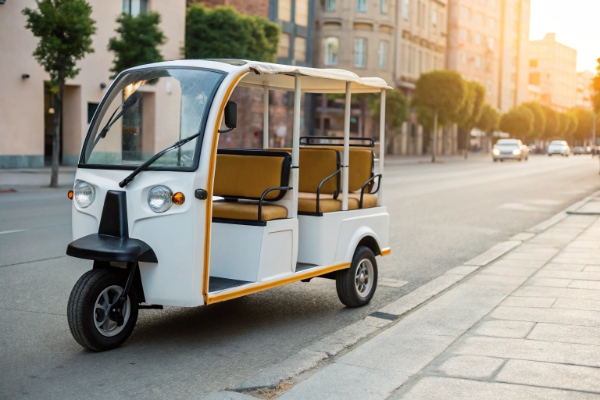
Saat kami merancang sepeda roda tiga listrik, kesederhanaan adalah kuncinya. Mesin bensin memiliki ratusan bagian bergerak yang memerlukan pelumasan, pembersihan, dan penggantian secara konstan. Motor listrik pada dasarnya memiliki satu bagian utama yang bergerak: rotor. Perbedaan mendasar ini mengubah segalanya dalam hal pemeliharaan jangka panjang. Pikirkan tentang semua pekerjaan jasa yang tidak lagi harus Anda bayar.
Dari pengalaman kami mengirimkan suku cadang secara global, permintaannya komponen motor listrik ini sangat kecil dibandingkan dengan pesanan konstan yang kami dapatkan untuk suku cadang mesin bensin seperti piston, filter, dan gasket.
Menghilangkan Tugas Pemeliharaan Umum
Penghematan datang dari semua hal yang Anda miliki jangan harus lakukan lagi. Berikut adalah rincian pekerjaan servis yang hilang begitu saja saat Anda beralih ke armada listrik.
| Tugas Pemeliharaan | Frekuensi Tuk-Tuk Bensin | Frekuensi Tuk-Tuk Listrik |
|---|---|---|
| Ganti Oli Mesin | Setiap 3.000 km | Tidak pernah |
| Ganti Busi | Setiap 10.000 km | Tidak pernah |
| Penggantian Filter | Setiap 5.000 km | Tidak pernah |
| Perbaikan Knalpot | Sesuai kebutuhan | Tidak pernah |
| Penyesuaian Kopling | Setiap 15.000 km | Tidak pernah |
| Keausan Kampas Rem | Normal | Berkurang (Pengereman Regeneratif) |
Satu-satunya item perawatan rutin pada tuk-tuk listrik adalah ban, rem, dan komponen suspensi—sama seperti kendaraan apa pun. Namun keseluruhan powertrain, bagian paling rumit dan mahal dari kendaraan berbahan bakar bensin, menjadi hampir seperti itu bebas perawatan. Hal ini berarti lebih sedikit waktu henti, lebih sedikit biaya tenaga kerja, dan lebih sedikit suku cadang yang harus disimpan.
Bagaimana masa pakai baterai dan biaya penggantian mempengaruhi total biaya kepemilikan?
Anda khawatir baterai mahal pada tuk-tuk listrik akan rusak. Pikiran tentang biaya penggantian yang tiba-tiba sebesar ribuan dolar merupakan kekhawatiran utama ketika Anda mencoba mengelola anggaran.
Baterai lithium berkualitas tinggi berharga sekitar $1.000-$1.300 tetapi dirancang untuk bertahan selama lebih dari 1.500 siklus pengisian daya, atau sekitar 3-5 tahun penggunaan sehari-hari. Jika Anda membagi biaya ini sepanjang masa pakainya, hal ini akan menjadi biaya operasional yang dapat diprediksi, bukan kejutan finansial yang terjadi secara tiba-tiba.
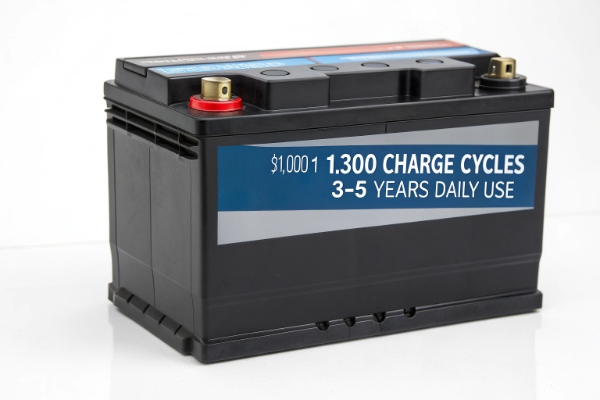
Baterai adalah satu-satunya komponen tuk-tuk listrik yang paling mahal. Saya mendapatkan pertanyaan ini sepanjang waktu dari importir baru. Mereka melihat label harga awal—baterai 72V 150Ah dapat menambah biaya kendaraan lebih dari $1.000—dan membandingkannya dengan model bensin murah. Namun baterai bukan hanya sebuah komponen; itu tangki bahan bakar Anda untuk lima tahun ke depan.
Anda pada dasarnya membayar di muka untuk energi Anda. Mari kita hitung nilainya.
Memahami Baterai sebagai Investasi
Kualitas yang bagus Baterai Litium Besi Fosfat (LiFePO4)., yang kami rekomendasikan untuk penggunaan komersial, memberikan masa pakai yang lama dan dapat diprediksi.
- Umur dalam Siklus: Baterai tipikal memiliki kemampuan 1.500-2.000 siklus pengisian/pengosongan penuh sebelum kapasitasnya turun hingga 80%.
- Jarak Total: Jika sekali pengisian daya memberi Anda jangkauan 150 km, jarak masa pakai baterai sangatlah besar.
150 km/charge × 1,500 cycles = 225,000 km - Biaya per Kilometer: Sekarang, mari kita perhitungkan biaya penggantiannya.
$1,300 (battery cost) ÷ 225,000 km = $0.0057 per km
Ketika Anda menambahkan ini kecil biaya penyusutan baterai untuk biaya listrik, totalnya masih jauh lebih rendah dibandingkan biaya bensin. Baterai bukanlah suatu tanggung jawab; ini adalah aset jangka panjang yang mengunci biaya operasional Anda yang rendah.
Faktor lain apa yang memperlebar kesenjangan TCO bagi operator armada?
Anda sedang mempertimbangkan kendaraan listrik tetapi tidak yakin mengenai biaya atau manfaat tersembunyi lainnya. Anda tidak ingin kehilangan tabungan lokal atau terkena biaya tak terduga yang merusak rencana bisnis Anda.
Pemerintah di seluruh dunia menawarkan insentif seperti kredit pajak dan pembebasan bea masuk untuk kendaraan listrik. Pada saat yang sama, pajak bahan bakar lokal yang tinggi dan zona rendah emisi baru di perkotaan dapat membuat pengoperasian tuk-tuk berbahan bakar bensin menjadi lebih mahal dan membatasi, sehingga memperlebar kesenjangan finansial.
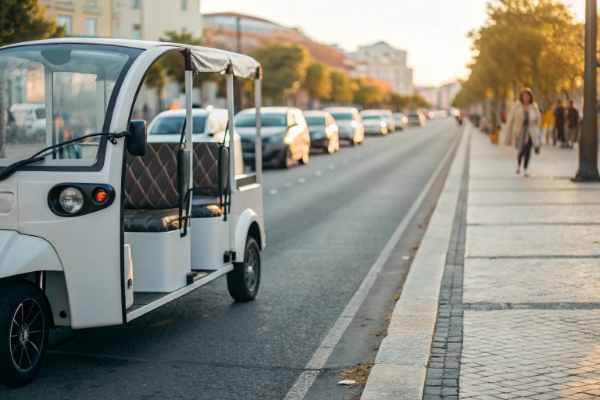
Perhitungan dasar bahan bakar dan perawatan sudah lebih mengutamakan listrik. Namun di banyak negara tujuan ekspor kami, kondisi lokal membuat pilihan menjadi lebih jelas. Faktor-faktor ini sering kali dirancang khusus untuk mendorong bisnis seperti milik Anda beralih ke transportasi yang lebih ramah lingkungan. Sebelum Anda memesan, saya selalu menyarankan klien saya untuk meneliti situasi setempat, karena ini dapat menghasilkan penghematan ekstra ribuan dolar.
Misalnya, klien pemerintah di Aljazair berhasil mendapatkan pendanaan untuk pembuatan sepeda roda tiga sampah listrik karena hal tersebut sejalan dengan tujuan lingkungan hidup nasional. Peluang ini semakin besar.
Faktor-Faktor Lokal Utama yang Perlu Diselidiki
Setiap pasar berbeda, jadi mengerjakan pekerjaan rumah Anda sangatlah penting. Berikut adalah tiga area utama yang perlu diperiksa yang dapat meningkatkan laba atas investasi Anda secara signifikan.
- Insentif Pemerintah: Carilah program apa pun yang menurunkan harga pembelian kendaraan listrik. Hal ini dapat mencakup subsidi langsung, keringanan PPN atau pajak impor, dan pengurangan biaya pendaftaran. Insentif ini terkadang dapat memangkas biaya awal sebesar 10-20%.
- Harga Energi dan Bahan Bakar Lokal: Semakin besar perbedaan antara tarif listrik dan harga bensin di negara Anda, semakin cepat Anda melihat penghematan. Negara-negara dengan pajak bahan bakar tinggi namun listrik terjangkau adalah pasar terbaik untuk tuk-tuk listrik.
- Peraturan Perkotaan: Many cities are introducing "Low Emission Zones" or "Clean Air Zones" di mana kendaraan yang lebih tua dan lebih berpolusi dilarang atau dikenakan biaya harian. Berinvestasi pada armada listrik sekarang adalah cara cerdas untuk mempersiapkan bisnis Anda di masa depan terhadap perubahan yang akan datang.
Kesimpulan
Mahalnya harga awal tuk-tuk listrik adalah sebuah investasi. Investasi ini membuahkan hasil dengan cepat melalui penghematan besar-besaran setiap hari pada bahan bakar dan hampir tidak adanya perawatan mesin.
